 English
 中文 (中国)
 Español
February 19, 2026
The Million-Dollar Medal: Alysa Liu’s Olympic Journey
April 19, 2026
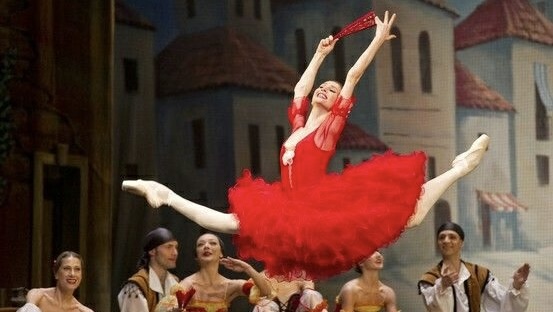
Svetlana Zakharova © Pinterest
In ballet, lines are everything. They shape how the audience and teachers perceive movement, even before considering difficulty or musicality. A clean line creates clarity, elegance, and control, while a broken line immediately distracts the eye.
For many students, the issue is not lack of flexibility or effort, but small habits that gradually distort the body’s natural alignment. These habits can become automatic if not corrected early, making progress more difficult over time.
One of the most common habits that affects ballet lines is sickling the feet. This happens when the ankle rolls inward instead of extending straight through the line of the leg.
Even if the leg is fully extended, a sickled foot breaks the visual continuity from hip to toe. It also weakens balance and can increase the risk of injury.
Correcting this requires awareness and strength. Dancers should focus on:
A strong, correctly aligned foot instantly improves the overall look of any position.
Another habit that ruins ballet lines is losing control of the upper body. This can appear as collapsed shoulders, a relaxed core, or a slightly bent posture.
Ballet lines are not only about legs and feet — they extend through the entire body. When the torso is not lifted and supported, even technically correct leg positions can look incomplete.
Maintaining a strong upper body includes:
This creates a continuous, elegant line from the head down through the body.
Straight legs are fundamental to clean ballet lines, yet many students unknowingly soften their knees, especially in extensions or transitions.
Even a slight bend can interrupt the length of the leg and reduce the clarity of the movement. This is often caused by insufficient strength or lack of attention to detail.
Improving this habit involves:
Over time, consistent attention to straight legs will significantly enhance the overall line.
A clear example of exceptional ballet lines can be seen in the performances of Svetlana Zakharova. Her movements are defined by extraordinary length, precision, and control.
What makes her lines stand out is not only her flexibility, but her attention to detail. Her feet are always fully extended and aligned, her legs completely straight, and her upper body lifted with effortless stability. Every position appears continuous, with no visible breaks in the line.
For students, this demonstrates that strong lines are not created by one element alone, but by the coordination of the entire body. Each detail contributes to the final visual result.
Ballet lines are built through consistency and awareness. Small corrections, repeated daily, create visible changes over time.
When dancers focus on foot alignment, upper body control, and full leg extension, their movements begin to look more refined and professional. It is not about forcing extreme positions, but about maintaining clarity and precision in every moment.
This is what transforms technique into artistry.
Achieve More With VSA: Boost your skills with world-class coaches for just $29/hour. Personalized programs 24/7, 365 days a year, anywhere in the world.
By Vitalina Andrushchenko, Staff Writer
February 19, 2026
The Million-Dollar Medal: Alysa Liu’s Olympic Journey

December 25, 2025
Nancy Kerrigan’s $10 Million Legacy: Success Beyond the Ice
January 08, 2026
2026 U.S. Skating Nationals Results
Competition highlights, industry trends, expert opinions, and stories from athletes and artists worldwide — delivered straight to your inbox