
December 25, 2025
Nancy Kerrigan’s $10 Million Legacy: Success Beyond the Ice
April 17, 2026
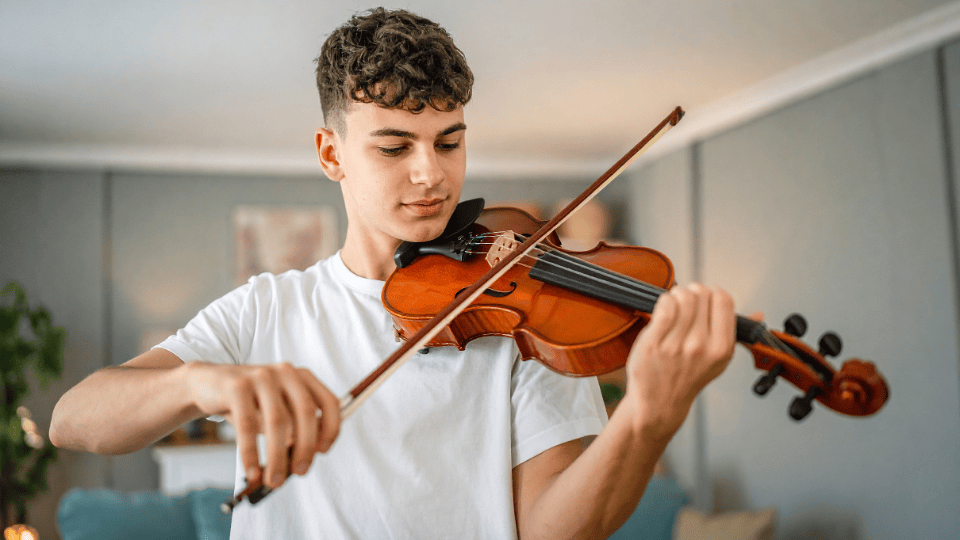
Learning the violin is often described as beautiful — and it is. But behind that beauty is a process that can feel slow, repetitive, and at times frustrating. Many students start with excitement, only to feel discouraged when progress doesn’t match their expectations.
Frustration is not a sign that you’re doing something wrong. It’s part of learning a complex instrument. The key is learning how to work with the process instead of against it.
Here are three practical ways violin students can practice more effectively — and with less frustration.
One of the biggest sources of frustration is trying to play at full speed too early. When mistakes happen repeatedly, tension builds — both physically and mentally.
Slowing down gives your brain and body time to understand each movement:
At first, it may feel too easy or even boring. But this is exactly where real progress happens. Playing slowly is not a step backward — it is how advanced players build reliability.
If something feels difficult, it usually means it needs to be practiced slower, not harder.
Trying to play an entire piece from start to finish can quickly become overwhelming, especially when certain parts are still unstable.
Instead, divide the music into smaller sections — even just a few notes at a time. Focus on one segment until it feels comfortable, then connect it to the next.
This approach:
Professional musicians rarely practice full pieces all the time. They focus on details first, then gradually bring everything together.
Many students become frustrated because they expect clean, beautiful sound too early. When reality doesn’t match that expectation, motivation drops.
In truth, mistakes are not interruptions to learning — they are the learning process. Every incorrect note or uneven sound gives you information about what to adjust.
Instead of reacting emotionally to mistakes, try observing them:
This shift from frustration to curiosity changes the entire experience of practice.
Practicing violin is not about forcing perfection. It is about building understanding, patience, and control over time.
When you slow down, focus on small sections, and accept imperfection, practice becomes more manageable — and even enjoyable. Progress may still be gradual, but it will feel steady and real.
And that’s what keeps musicians going.
Achieve More With VSA: Boost your skills with world-class coaches for just $29/hour. Personalized programs 24/7, 365 days a year, anywhere in the world.
By Vitalina Andrushchenko, Staff Writer

December 25, 2025
Nancy Kerrigan’s $10 Million Legacy: Success Beyond the Ice
February 19, 2026
The Million-Dollar Medal: Alysa Liu’s Olympic Journey
January 08, 2026
2026 U.S. Skating Nationals Results
Competition highlights, industry trends, expert opinions, and stories from athletes and artists worldwide — delivered straight to your inbox