
December 25, 2025
Nancy Kerrigan’s $10 Million Legacy: Success Beyond the Ice
October 30, 2025
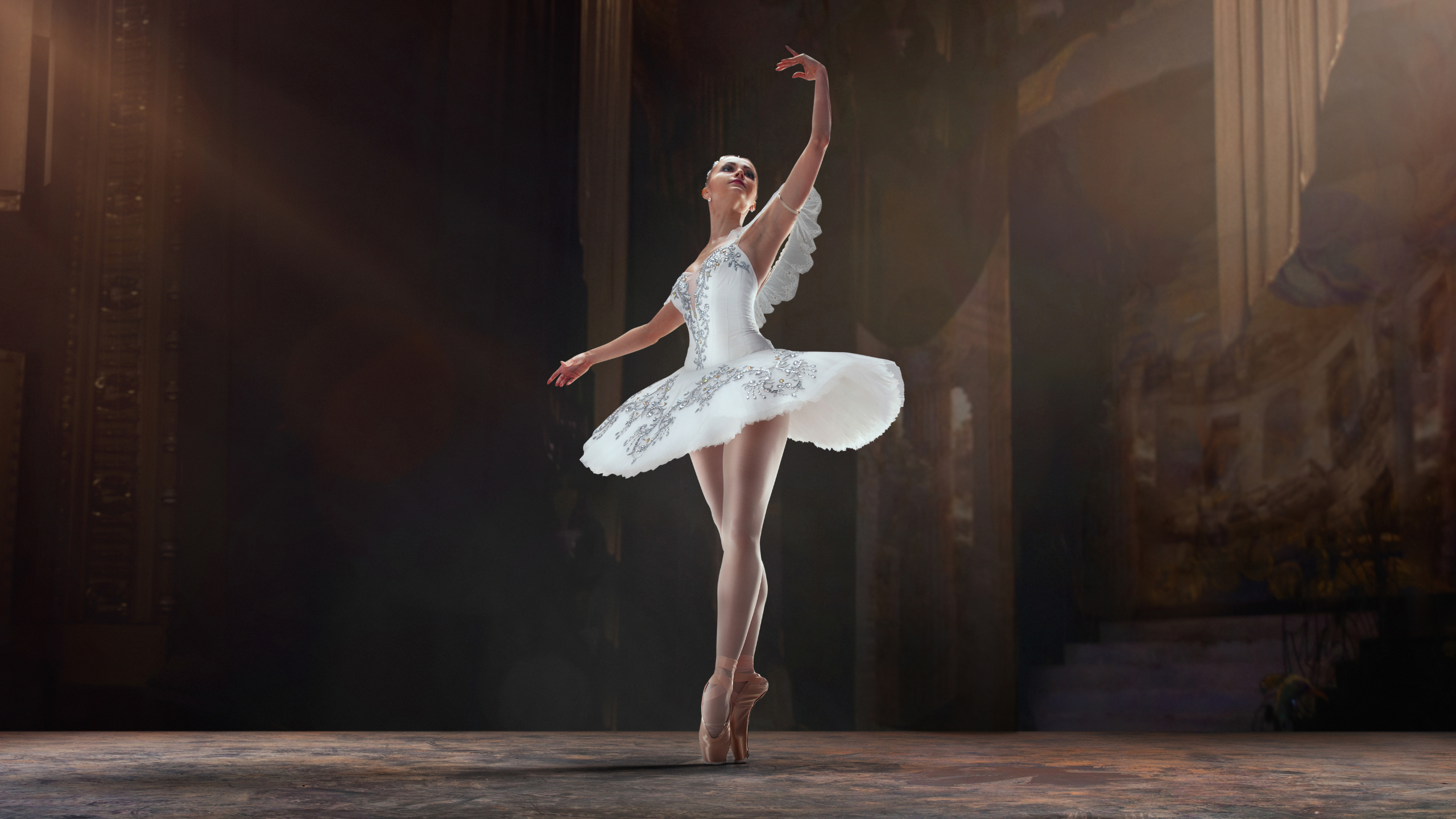
A perfect pirouette looks effortless — a seamless turn balanced on one leg, with the dancer’s body aligned as if time itself slows down. But behind that grace lies a precise blend of physics, body control, and rhythm. Understanding the science behind spinning can transform your technique, turning dizziness and wobbles into fluid, controlled rotations.
Every pirouette begins with balance. A dancer’s center of gravity — the point where the body’s mass is evenly distributed — must align directly over the supporting foot. When that alignment is off, even by a few centimeters, the rotation wobbles or collapses.
To stay centered, dancers engage their core muscles and keep their posture tall. The head, spine, and hips form a straight line over the supporting leg. This stability minimizes external torque (rotational force) and keeps the spin smooth and controlled.
A simple test: if you can rise to relevé (on the ball of one foot) and hold still for several seconds, your balance foundation is strong enough for multiple turns.
The power behind every pirouette comes from kinetic energy — the energy of motion. When a dancer pushes off the floor, that linear energy converts into angular momentum, the rotational force that keeps the body spinning.
What’s fascinating is that angular momentum stays constant during the spin — unless external forces (like friction or air resistance) interfere. That’s why small adjustments make a huge difference:
This principle, known as the conservation of angular momentum, is why controlled body placement is more powerful than brute strength.
Every dancer knows the dizzy aftermath of spinning — until they master spotting. Spotting means fixing your gaze on one point, keeping your head still as long as possible, then snapping it around quickly to refocus during each rotation.
This technique reduces sensory confusion in the inner ear, where your vestibular system tracks motion and balance. By giving your brain a stable visual reference, spotting helps you stay oriented — and it also adds sharpness and confidence to your turns.
Physics might explain the motion, but rhythm gives it flow. The best pirouettes align physics with musical timing — using the right amount of energy at the right moment. A smooth preparation, coordinated arm movement, and precise release of energy create that feeling of effortless spin.
Too much force, and you lose balance. Too little, and the rotation stalls. The art lies in finding that perfect middle ground — where body awareness meets physics.
A pirouette isn’t just a spin — it’s physics in action. Every rotation is a delicate balance of energy, alignment, and control. When you understand how the forces work, you can use them to your advantage, turning science into artistry.
Achieve More With VSA: Boost your skills with world-class coaches for just $29/hour. Perfect for skaters, hockey players, dancers, and athletes, VSA offers personalized training 24/7, 365 days a year, anywhere in the world.
By Vitalina Andrushchenko, Staff Writer

December 25, 2025
Nancy Kerrigan’s $10 Million Legacy: Success Beyond the Ice
February 19, 2026
The Million-Dollar Medal: Alysa Liu’s Olympic Journey
January 08, 2026
2026 U.S. Skating Nationals Results
Competition highlights, industry trends, expert opinions, and stories from athletes and artists worldwide — delivered straight to your inbox