 English
 中文 (中国)
 Español
February 19, 2026
The Million-Dollar Medal: Alysa Liu’s Olympic Journey
November 15, 2025
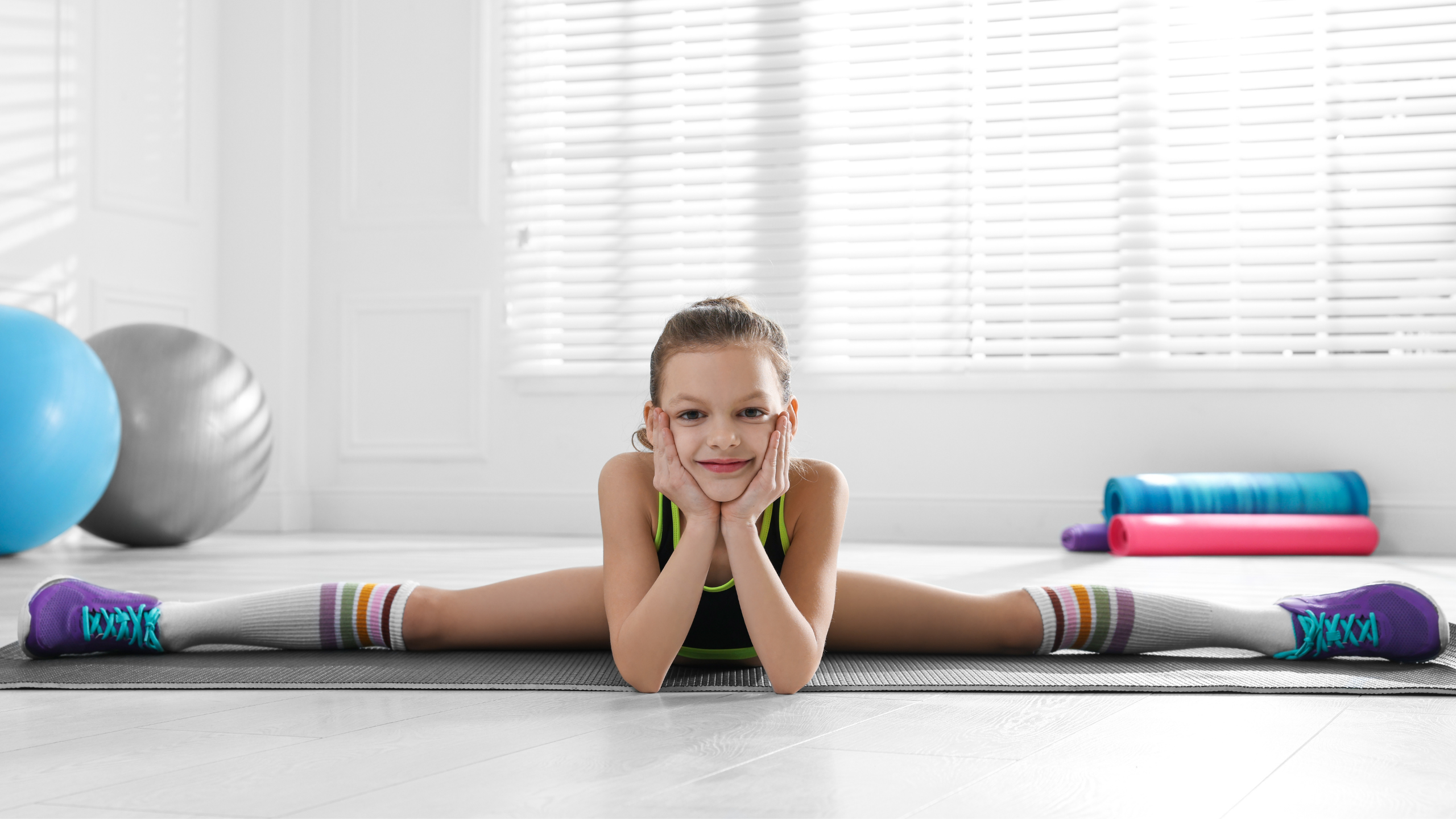
Kids seem to fold themselves into pretzels without a second thought. Touching toes, doing splits, or popping into a backbend looks effortless. Yet by adolescence, many struggle to reach past their knees. This dramatic loss of flexibility isn’t inevitable — it’s largely a consequence of modern lifestyles. Understanding why it happens empowers parents, coaches, and adults to preserve (or regain) range of motion for life.
Children’s connective tissues (tendons, ligaments, fascia) contain more water and fewer cross-links between collagen fibers. Think of it like fresh elastic vs. old rubber bands. Starting around age 10–12, collagen cross-links increase, making tissues less pliable. This is a normal aging process, but inactivity accelerates it.
Prolonged sitting shortens hip flexors, hamstrings, and pectoral muscles while weakening glutes, core, and posterior chain. The brain adapts by “locking in” these shortened positions through neural inhibition — a protective mechanism that feels like permanent tightness.
During puberty, bones lengthen faster than muscles and tendons can stretch. Without regular elongation, muscles remain in a chronically shortened state. This explains why many teens suddenly “lose” their childhood splits.
Young kids move in all planes: crawling, rolling, climbing trees. By middle school, structured sports and screen time replace free play, reducing multi-directional loading that naturally maintains joint capsules and muscle elasticity.
Unlike height or eye color, flexibility responds remarkably to consistent input — at any age. Studies show that adults who adopt daily mobility routines can regain 80–90% of lost range within 12 weeks.
Pro Tip: Turn stretching into a family ritual — 5-minute “bedtime mobility” prevents kids from viewing it as “exercise.”
Flexible muscles are strong muscles. Incorporate:
Research in the Journal of Strength & Conditioning shows full-ROM resistance training increases flexibility more than static stretching alone.
Monkey bars, crab walks, bear crawls, and cartwheels load joints through natural ranges. Schedule 1–2 “movement snack” sessions weekly:
5 min Animal Flow Circuit
– Bear crawl → Crab walk → Inchworm → Frog jumps
Kids burn energy; adults rebuild forgotten patterns.
Teach kids to gently explore their maximum range 2–3x/week:
Safety Rule: Never force past pain. Discomfort = OK; sharp pain = stop.
Preserving flexibility reduces injury risk by 25–40% in youth sports (per British Journal of Sports Medicine). It also:
Flexibility isn’t a childhood gift that vanishes — it’s a skill eroded by disuse. Start small, stay consistent, and make movement playful. Your 10-year-old’s cartwheel today becomes your 50-year-old’s pain-free golf swing tomorrow.
Achieve More With VSA: Boost your skills with world-class coaches for just $29/hour. Perfect for skaters, hockey players, dancers, and athletes, VSA offers personalized training 24/7, 365 days a year, anywhere in the world.
By Vitalina Andrushchenko, Staff Writer
February 19, 2026
The Million-Dollar Medal: Alysa Liu’s Olympic Journey

December 25, 2025
Nancy Kerrigan’s $10 Million Legacy: Success Beyond the Ice
January 08, 2026
2026 U.S. Skating Nationals Results
Competition highlights, industry trends, expert opinions, and stories from athletes and artists worldwide — delivered straight to your inbox