 English
 中文 (中国)
 Español
December 25, 2025
Nancy Kerrigan’s $10 Million Legacy: Success Beyond the Ice
May 05, 2026
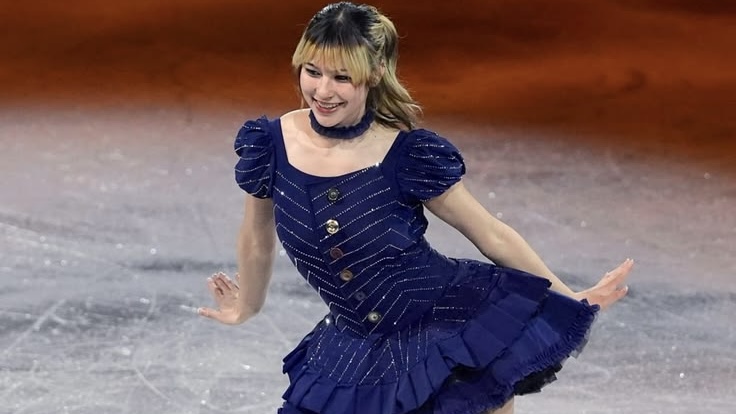
During the 2026 Winter Olympics, a new phrase began circulating in the figure skating world — “The Alysa Liu Effect.” It described more than just victories. It captured a shift in how a skater could perform, present herself, and define success on her own terms.
At just 20 years old, Alysa Liu didn’t just win — she changed perception. Her performances in Milan earned her two Olympic gold medals, including a historic individual title that made her the first American woman in over two decades to achieve that result. But what truly stood out was not only her technical level, but her individuality.
For decades, female figure skaters were expected to follow a certain image — elegant, controlled, and often stylistically similar. Liu challenged that expectation.
From her choreography to her appearance, everything reflected her personal identity. Her choices, including bold styling and unique details, became part of her performance rather than separate from it. Instead of adapting to the sport, she reshaped how the sport could look.
This is what defined the “Alysa Liu Effect” — authenticity becoming a competitive advantage.
Liu openly described her approach to skating as a form of self-expression, similar to fashion. She did not separate performance from personality. Every detail, from movement quality to visual presentation, was intentional and personal.
This approach resonated strongly with audiences, especially younger generations. It showed that technical excellence and individuality are not opposites — they can strengthen each other.
Her impact quickly extended beyond competition. Liu became a house ambassador for Louis Vuitton, joining a group of elite global athletes.
This move reflected a broader shift: figure skaters are no longer seen only within their sport, but as cultural figures with influence across industries. Liu’s presence connected sport, fashion, and identity in a way that felt modern and relevant.
An important part of Liu’s story is not only her success, but her pause. After early achievements, including national titles at ages 13 and 14, she experienced burnout and stepped away from competition after the 2022 Olympics.
That decision, which might have seemed risky, became a turning point. During her break, she rebuilt her relationship with skating, explored life outside the sport, and returned with renewed motivation.
Later, she even chose to skip major competitions again to protect her well-being, showing that long-term success includes knowing when to step back.
Liu’s advice is clear: do not be afraid to take a break if needed. Growth does not always come from pushing harder — sometimes it comes from pausing and resetting.
Her journey highlights an important lesson for students and athletes: identity should not be limited to performance results. When athletes feel free to express themselves and take control of their path, their performance often becomes stronger and more meaningful.
The “Alysa Liu Effect” is not just about one Olympic cycle. It represents a shift in mindset.
It shows that success in modern sport is no longer defined only by scores and medals, but also by authenticity, balance, and the ability to evolve. Liu’s story demonstrates that choosing your own direction — even when it seems uncertain — can lead to both personal fulfillment and professional success.
Source: article by Siddhant Lazar on essentiallysports.com, published May 4, 2026.
Achieve More With VSA: Boost your skills with world-class coaches for just $29/hour. Personalized programs 24/7, 365 days a year, anywhere in the world.
By Vitalina Andrushchenko, Staff Writer

December 25, 2025
Nancy Kerrigan’s $10 Million Legacy: Success Beyond the Ice
February 19, 2026
The Million-Dollar Medal: Alysa Liu’s Olympic Journey
January 08, 2026
2026 U.S. Skating Nationals Results
Competition highlights, industry trends, expert opinions, and stories from athletes and artists worldwide — delivered straight to your inbox