 English
 中文 (中国)
 Español
February 19, 2026
The Million-Dollar Medal: Alysa Liu’s Olympic Journey
June 14, 2026
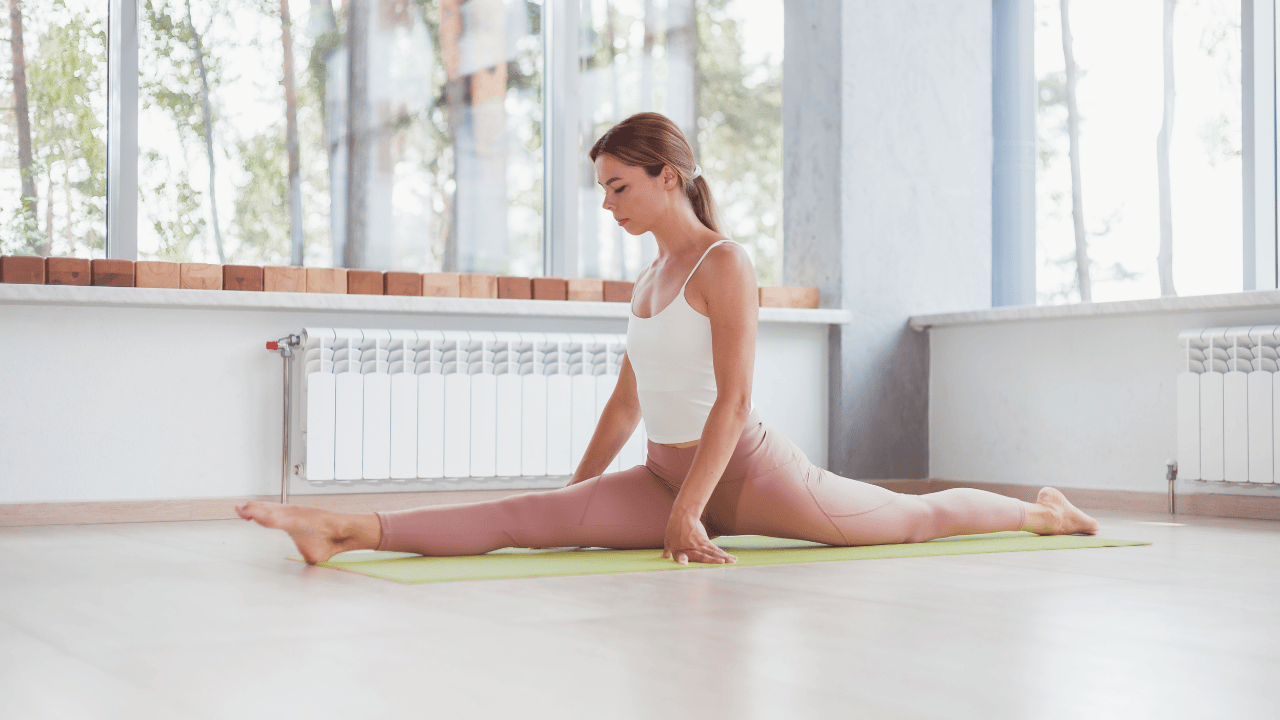
Many people believe flexibility depends only on muscle length. If a split feels tight, the common assumption is that the muscles simply need more stretching.
In reality, your nervous system plays a major role in determining how flexible you are.
Your brain constantly receives information from muscles, tendons, and joints. Based on this information, it decides how far your body can safely move. If the nervous system perceives a position as unsafe, it may limit your range of motion—even if your muscles are physically capable of moving farther.
(Source: National Academy of Sports Medicine, Stretching and Flexibility Research)
Have you ever noticed that your splits feel easier one day and much harder the next?
This often has little to do with changes in muscle length.
Factors such as stress, sleep quality, fatigue, hydration, and recovery can influence how your nervous system responds to stretching.
When the body feels relaxed and safe, muscles are more likely to allow greater movement. When the body is tired or stressed, protective tension often increases.
(Source: Journal of Sports Sciences)
The nervous system contains specialized sensory receptors that monitor movement.
One of these receptors, called the muscle spindle, detects rapid stretching. If a stretch occurs too quickly, the spindle may trigger a protective contraction to prevent potential injury.
This is one reason why bouncing aggressively during stretches often feels uncomfortable and can limit flexibility progress.
Slow, controlled stretching usually produces better long-term results.
(Source: Human Kinetics Flexibility Studies)
Many people think flexibility is something you either have or do not have.
Researchers increasingly view flexibility as a trainable skill.
As the nervous system becomes familiar with certain positions, it gradually learns that those positions are safe. Over time, the brain may reduce protective muscle tension, allowing greater range of motion.
This explains why consistent practice often works better than occasional intense stretching sessions.
(Source: Strength and Conditioning Journal)
Scientists have discovered that the sensation of stretch is often a perception rather than an actual physical limit.
In many cases, the feeling of tightness appears before muscles reach their maximum mechanical capacity.
In simple terms, your brain may tell you to stop moving long before your body reaches its true limit.
This protective response helps reduce injury risk.
(Source: Journal of Applied Physiology)
Breathing affects the nervous system more than many athletes realize.
Slow, controlled breathing activates the parasympathetic nervous system, often called the “rest and recovery” system.
When this system becomes more active, muscle tension can decrease, making stretching feel easier and more comfortable.
This is one reason many flexibility coaches encourage deep breathing during stretching sessions.
(Source: Frontiers in Physiology)
Trying to force a split or push aggressively into a stretch may trigger the body’s protective mechanisms.
Instead of relaxing, muscles can become more guarded.
This response often explains why athletes who stretch extremely hard do not always become more flexible.
The nervous system responds best when it feels safe rather than threatened.
(Source: International Journal of Sports Physical Therapy)
One surprising factor affecting flexibility is sleep.
Poor sleep can increase fatigue, reduce recovery quality, and affect nervous system function.
Many athletes notice that movement feels stiffer after several nights of inadequate rest.
Recovery is not only about muscles—it is also about the nervous system.
(Source: Sleep Medicine Reviews)
Athletes can improve flexibility more effectively by supporting their nervous system:
These habits help the body feel safe and ready to move.
Modern sports science is changing how coaches think about flexibility.
Instead of viewing flexibility as simply “long muscles,” many experts now see it as a complex interaction between muscles, connective tissues, and the nervous system.
This perspective helps explain why flexibility can improve without dramatic changes in muscle length and why recovery, stress management, and movement quality matter so much.
If your flexibility progress has stalled, your muscles may not be the problem.
The nervous system plays a powerful role in controlling movement, regulating tension, and determining how far your body is willing to go.
Understanding this connection can help athletes train smarter rather than simply stretching harder.
Sometimes the key to becoming more flexible is not convincing your muscles—but convincing your brain that the movement is safe.
Achieve More With VSA: Boost your skills with world-class coaches for just $29/hour. Personalized programs 24/7, 365 days a year, anywhere in the world.
By Vitalina Andrushchenko, Staff Writer

February 19, 2026
The Million-Dollar Medal: Alysa Liu’s Olympic Journey

December 25, 2025
Nancy Kerrigan’s $10 Million Legacy: Success Beyond the Ice

January 08, 2026
2026 U.S. Skating Nationals Results
Competition highlights, industry trends, expert opinions, and stories from athletes and artists worldwide — delivered straight to your inbox