 English
 中文 (中国)
 Español
February 19, 2026
The Million-Dollar Medal: Alysa Liu’s Olympic Journey
June 25, 2026

Recording yourself while practicing a musical instrument is one of the fastest ways to improve performance quality.
Studies in music pedagogy show that self-observation increases error detection accuracy because performers often miss timing, tone, and posture issues while actively playing. When listening back, the brain switches from “execution mode” to “analysis mode,” which improves objective judgment.
Professional musicians, including orchestral performers and soloists, commonly use recording as part of their daily practice routine.
Effective practice recordings are not just full performances.
Musicians benefit from recording short sections such as difficult passages, transitions between phrases, rhythm-heavy sections, or technically unstable areas.
This makes it easier to isolate recurring problems instead of reviewing an entire piece without focus.
High-level performers often break a single piece into 10–20 second segments for detailed review.
When analyzing a recording, the goal is not emotional evaluation but technical evaluation.
Common listening points include rhythm stability, intonation accuracy, articulation clarity, dynamic balance, and timing consistency.
Many advanced players use a checklist approach, reviewing the same criteria after every recording to track progress over time.
This method creates measurable improvement instead of vague impressions like “it sounded bad” or “it felt okay.”
Audio alone is not enough.
Video recordings help identify posture issues, tension in shoulders or hands, inefficient bow paths, or unnecessary body movement.
For string players, bow angle consistency and contact point stability are often easier to detect visually than aurally.
For pianists, wrist height, finger isolation, and arm weight distribution become clearer when viewed from above or the side.
Joshua Bell is known for combining intense practice discipline with detailed self-review habits.
In interviews, he has emphasized the importance of listening critically to one’s own playing rather than relying only on teacher feedback.
His approach reflects a common professional principle: elite musicians constantly evaluate phrasing, tone consistency, and musical direction by reviewing both live performance memory and recorded sessions.
This type of reflective practice is one reason many top violinists maintain long-term technical stability even under concert pressure.
One of the most effective strategies is recording the same passage across multiple days.
By comparing recordings, musicians can detect subtle improvements in tempo stability, cleaner transitions, and improved tone quality.
This creates a feedback loop where practice decisions are based on evidence rather than assumption.
Even small improvements become measurable, which increases motivation and focus.
A common mistake is trying to fix everything at once after listening to a recording.
Experts recommend focusing on one or two issues per practice cycle.
For example, one session may focus only on rhythm stability, while the next focuses on tone production.
This prevents overload and leads to deeper, more permanent improvement.
Recording helps create emotional distance from mistakes.
During live playing, errors can feel larger than they actually are. Playback reduces this distortion and helps musicians understand which problems are structural and which are minor.
This improves confidence during real performances.
Many advanced musicians keep a structured archive of recordings.
Over months or years, this archive shows technical evolution, repertoire development, and performance maturity.
It also helps prepare for auditions, concerts, and exams by identifying long-term weaknesses.
Recording and analyzing your playing transforms practice into a structured learning system.
Instead of guessing what needs improvement, musicians can hear, see, and measure progress clearly.
With consistent use, this method develops accuracy, confidence, and artistic control at a much faster rate than practice alone.
Achieve More With VSA: Boost your skills with world-class coaches for just $29/hour. Personalized programs 24/7, 365 days a year, anywhere in the world.
By Vitalina Andrushchenko, Staff Writer
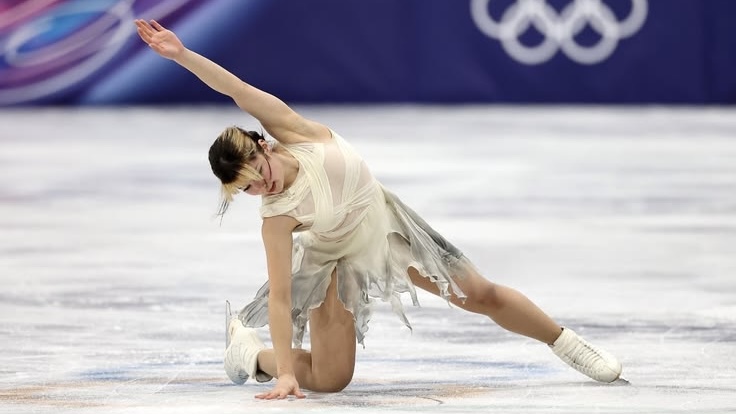
February 19, 2026
The Million-Dollar Medal: Alysa Liu’s Olympic Journey

December 25, 2025
Nancy Kerrigan’s $10 Million Legacy: Success Beyond the Ice
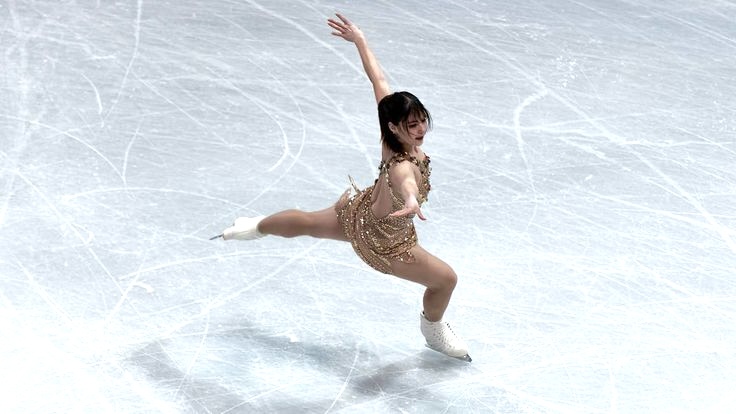
January 08, 2026
2026 U.S. Skating Nationals Results
Competition highlights, industry trends, expert opinions, and stories from athletes and artists worldwide — delivered straight to your inbox