
September 19, 2025
Trending Famous Ballerinas of 2025
March 07, 2026
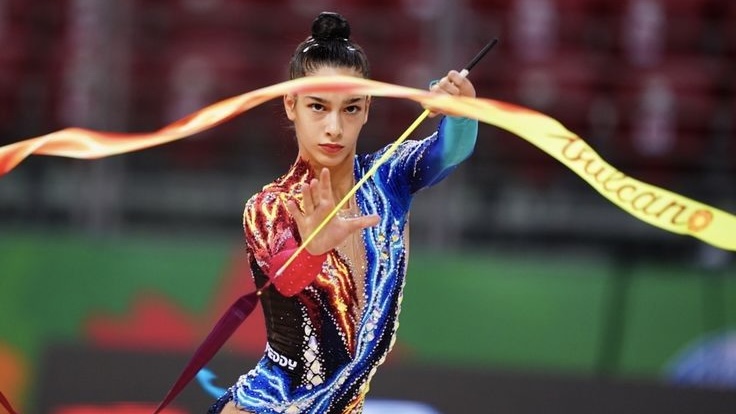
The ribbon is arguably the most iconic and visually stunning apparatus in rhythmic gymnastics, but for beginners, it is often a frustrating “snake” that refuses to cooperate. While stars like Stiliana Nikolova make 6-meter silk look like an extension of their breath, most novices find themselves literally tied in knots. Avoiding these three common technical pitfalls will shave months off your learning curve.
The most common mistake is using the entire arm to create patterns. If you move from the shoulder, the ribbon will lack the “snap” needed to stay off the floor.
Beginners often focus only on the stick. However, a ribbon pattern isn’t complete until the very end of the fabric has cleared the move. If you transition too early, the tail will wrap around your legs or the stick.
Ribbons often go “flat” because beginners draw patterns horizontally in front of them. In elite gymnastics, patterns should be wide, high, and vertical to maximize visual impact and avoid tangles.
Ultimately, mastering the ribbon is less about strength and more about the rhythmic dialogue between your wrist and the wind.
Achieve More With VSA: Boost your skills with world-class coaches for just $29/hour. Personalized programs 24/7, 365 days a year, anywhere in the world.
By Vitalina Andrushchenko, Staff Writer

September 19, 2025
Trending Famous Ballerinas of 2025

December 25, 2025
Nancy Kerrigan’s $10 Million Legacy: Success Beyond the Ice
January 08, 2026
2026 U.S. Skating Nationals Results
Competition highlights, industry trends, expert opinions, and stories from athletes and artists worldwide — delivered straight to your inbox