
December 25, 2025
Nancy Kerrigan’s $10 Million Legacy: Success Beyond the Ice
April 16, 2026

In the acting world, one of the most common challenges performers face is “being typecast.” It is a term often discussed in classes, auditions, and professional environments, yet many students do not fully understand what it means or how to approach it strategically.
Rather than seeing typecasting as purely negative, it is important to understand its role in the industry — and how actors can use it to their advantage while still growing creatively.
Typecasting happens when an actor is repeatedly cast in similar roles based on their appearance, voice, personality, or previous performances.
For example, an actor might consistently be chosen for:
Casting directors often rely on familiar patterns because it helps them quickly match actors to roles. From an industry perspective, this is practical and efficient.
Typecasting is not random. It usually develops from a combination of factors:
For instance, Ryan Reynolds is often associated with witty, sarcastic characters, while Helena Bonham Carter is frequently cast in eccentric, unconventional roles.
These patterns are not limitations by default — they are recognitions of what an actor naturally does well.
Although many actors worry about being limited, typecasting can actually be a powerful starting point.
First, it helps actors book work more consistently. When casting directors clearly understand where you fit, you are more likely to be selected.
Second, it allows actors to build a strong professional identity. Being known for a certain type can make you memorable in a competitive industry.
For students, this is especially important. At early stages, clarity is often more valuable than versatility.
However, relying too heavily on one type can eventually limit growth. Actors may find it difficult to be considered for different roles, even if they have the ability to perform them.
Over time, this can lead to creative frustration and fewer opportunities to explore range.
The key is balance — using your type as a foundation, not a boundary.
A strong example of navigating typecasting is Margot Robbie. Early in her career, she was often cast in roles emphasizing charm and glamour. However, she gradually expanded her range by choosing diverse and challenging characters.
In films like I, Tonya, her performance demonstrated not only physical transformation but also emotional depth and complexity. She moved beyond a single “type” by actively selecting roles that required new skills and perspectives.
For acting students, this highlights an important strategy: growth comes from intentional choices. Even if you start within a certain type, you can expand it over time through training and role selection.
Instead of resisting typecasting, begin by identifying your natural casting type. Ask yourself:
Once you understand your type:
It is also helpful to experiment in classes, where there is more freedom than in professional casting environments. This is where you can safely explore roles outside your usual type.
Typecasting is not a limitation — it is a tool. It helps actors enter the industry, build recognition, and gain experience.
At the same time, long-term success depends on the ability to grow beyond it. By understanding your type, using it strategically, and gradually expanding your range, you can turn typecasting into a stepping stone rather than an obstacle.
Achieve More With VSA: Boost your skills with world-class coaches for just $29/hour. Personalized programs 24/7, 365 days a year, anywhere in the world.
By Vitalina Andrushchenko, Staff Writer

December 25, 2025
Nancy Kerrigan’s $10 Million Legacy: Success Beyond the Ice
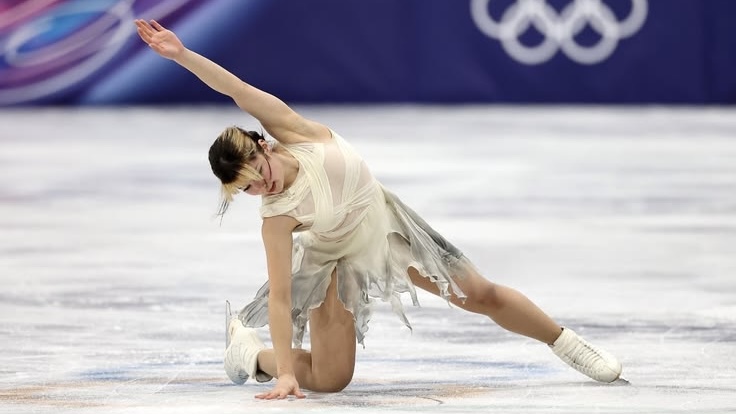
February 19, 2026
The Million-Dollar Medal: Alysa Liu’s Olympic Journey
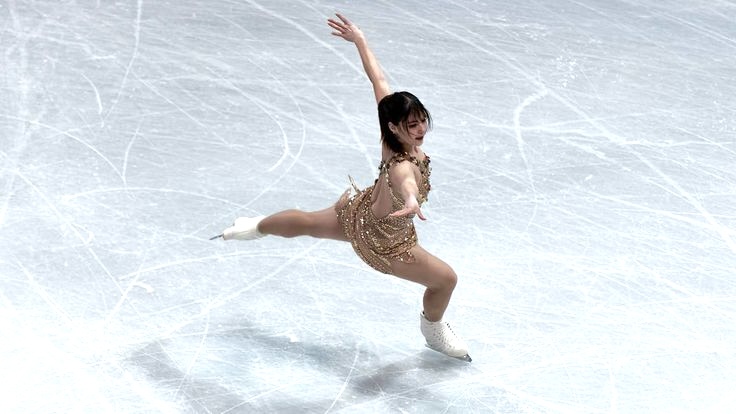
January 08, 2026
2026 U.S. Skating Nationals Results
Competition highlights, industry trends, expert opinions, and stories from athletes and artists worldwide — delivered straight to your inbox