 English
 中文 (中国)
 Español
February 19, 2026
The Million-Dollar Medal: Alysa Liu’s Olympic Journey
June 16, 2026
Whether you’re a figure skater, dancer, rhythmic gymnast, or artistic gymnast, faster spins can dramatically improve the quality and appearance of a performance.
A fast spin looks more controlled, more difficult, and often earns higher scores from judges. However, many athletes focus only on spinning harder when the real solution lies in technique.
Increasing spin speed is usually about efficiency, body position, and balance rather than strength alone.
One of the most important principles behind spinning is reducing the distance between your body mass and your axis of rotation.
When athletes pull their arms and free leg closer to their body, they rotate faster because their body becomes more compact.
You can observe this in figure skating spins, gymnastics pirouettes, and ballet turns.
Small adjustments often create surprisingly large changes in rotational speed.
Many athletes try to spin faster before they can consistently stay centered.
This usually creates wobbling, traveling, or loss of control.
Before focusing on speed, make sure you can:
A stable spin naturally allows greater speed.
Strong core muscles help transfer energy efficiently during rotation.
However, “tight” does not mean rigid.
The best spinners maintain core engagement while allowing smooth movement through the shoulders and hips.
Excess tension often slows rotation.
Every spin revolves around an invisible vertical line called the axis.
If the body leans forward, backward, or sideways, energy is lost.
Many athletes who struggle with spin speed actually have good rotational power but poor axis control.
Video analysis often reveals small alignment errors that are difficult to feel during practice.
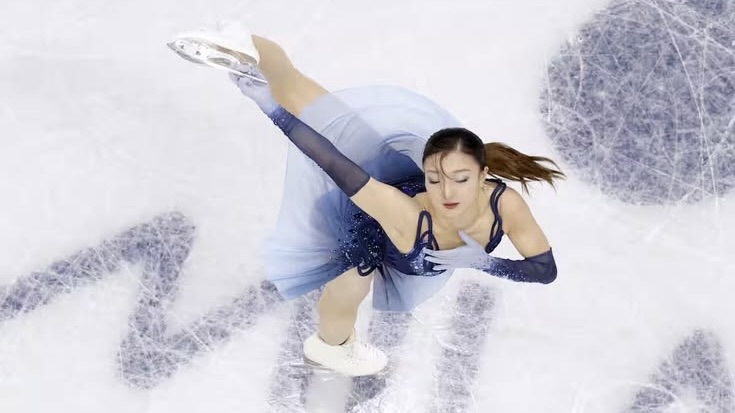
A great example of efficient spinning is Kaori Sakamoto.
Although she is best known for her powerful skating skills and jumps, her spins demonstrate excellent centering and body control. When analyzing her spin technique, one noticeable feature is how stable her axis remains throughout the rotation. Her upper body stays organized while her core remains engaged, allowing her to maintain speed without excessive effort.
Another interesting aspect of Sakamoto’s spins is her consistency. Even under competition pressure, she rarely loses control of her center. This allows her to maintain rotation speed deep into the spin rather than slowing dramatically after the first few revolutions. Her technique shows that efficiency often matters more than forcing additional speed.
The quality of the entry strongly affects the entire spin.
A rushed or unstable entry creates problems that continue throughout the rotation.
Spend time practicing:
Many athletes gain speed simply by improving their setup.
The speed at which you pull your arms into position can influence acceleration.
Practice moving from open positions into compact positions quickly while maintaining balance.
However, avoid throwing your arms aggressively, which can disrupt alignment.
The movement should be fast but controlled.
Small ankle adjustments help maintain balance during rotation.
Exercises such as:
can improve stability and support faster spins.
This advice surprises many athletes.
Trying too hard often makes spins slower.
Excess tension in the shoulders, neck, jaw, and arms creates resistance.
Elite athletes frequently appear relaxed even while rotating at high speeds.
The body should feel organized, not stiff.
Some athletes can accelerate quickly but lose speed after several rotations.
To improve endurance:
Many athletes accidentally reduce their spin speed by:
Correcting these habits often produces immediate improvements.
Fast spins are built on strong fundamentals.
The athletes with the fastest rotations are not always the strongest—they are often the most efficient.
Focus on balance, alignment, core control, and consistency before chasing more speed.
When technique improves, speed often follows naturally.
A centered spin that accelerates smoothly will always look more impressive than a fast spin that lacks control.
Achieve More With VSA: Boost your skills with world-class coaches for just $29/hour. Personalized programs 24/7, 365 days a year, anywhere in the world.
By Vitalina Andrushchenko, Staff Writer
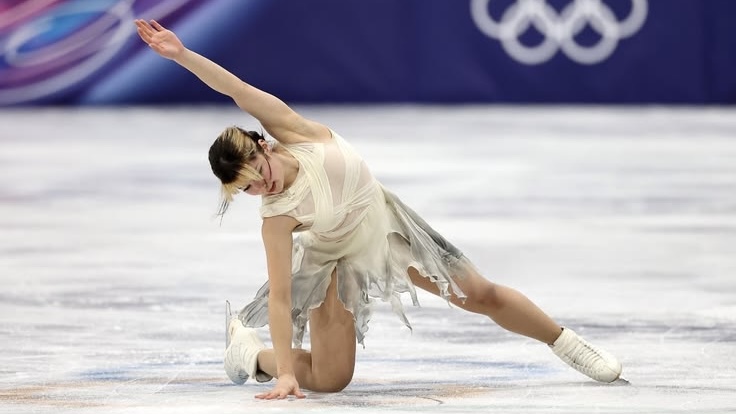
February 19, 2026
The Million-Dollar Medal: Alysa Liu’s Olympic Journey

December 25, 2025
Nancy Kerrigan’s $10 Million Legacy: Success Beyond the Ice
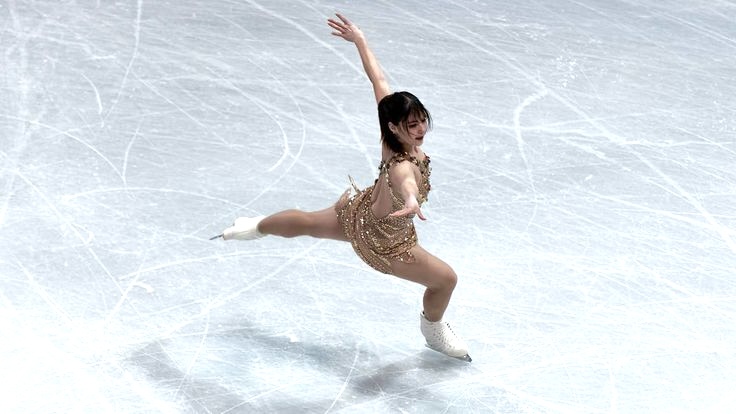
January 08, 2026
2026 U.S. Skating Nationals Results
Competition highlights, industry trends, expert opinions, and stories from athletes and artists worldwide — delivered straight to your inbox