 English
 中文 (中国)
 Español
December 25, 2025
Nancy Kerrigan’s $10 Million Legacy: Success Beyond the Ice
May 08, 2026
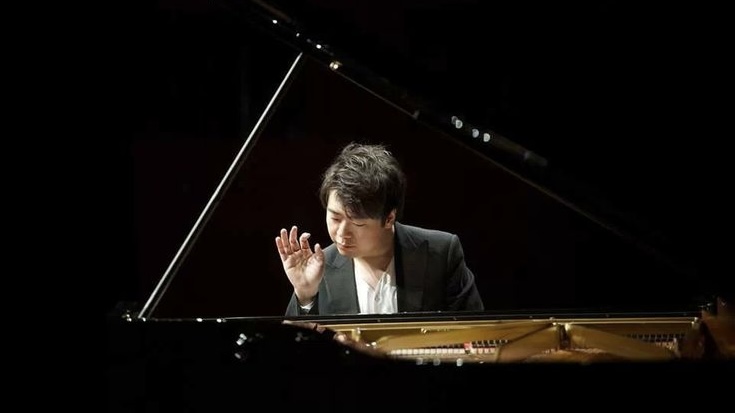
Many piano students try to memorize pieces by repeating them again and again from the beginning. While repetition helps, memorization becomes much faster when pianists first understand the structure of the music.
Looking at chord progressions, repeated patterns, dynamics, and musical phrases helps the brain organize information more efficiently. Instead of memorizing hundreds of individual notes, the pianist begins to recognize sections and musical ideas.
For example, Lang Lang has spoken in interviews about the importance of emotional connection and understanding the story behind a piece while practicing. His performances are often remembered not only for technical precision, but also for musical expression and deep familiarity with the structure of the music. This approach allows many professional pianists to memorize difficult works more naturally and confidently.
Trying to learn an entire piece at once can quickly become overwhelming. Many professional pianists memorize music faster by dividing pieces into very small sections.
Practicing only two or four measures repeatedly allows the brain to focus more clearly on details such as fingering, rhythm, and dynamics. Once a small section feels comfortable, it can be connected to the next one.
This method also reduces frustration because students experience small successes more often during practice sessions.
One of the most effective memorization techniques is practicing each hand separately before combining them together.
When both hands are played at the same time too early, the brain may depend mostly on muscle memory. However, practicing the right and left hands individually strengthens musical understanding and improves accuracy.
Students who can confidently play each hand alone often recover more easily from mistakes during performances because they understand the music more deeply instead of relying only on automatic movement.
Many pianists try to play pieces at full speed too soon. Fast practice with mistakes can actually slow down memorization because the brain repeats incorrect patterns.
Slow practice gives the hands and mind enough time to process every movement carefully. It improves rhythm, accuracy, and confidence while creating stronger long-term memory.
Professional musicians often spend a surprising amount of time practicing slowly, especially when learning difficult passages.
Memorization does not only happen at the piano. Many advanced musicians also practice mentally away from the instrument.
Visualizing the keyboard, hearing the music internally, or imagining hand movements can strengthen memory significantly. Some pianists even study the sheet music silently before sleeping or while traveling.
Mental practice trains concentration and helps musicians feel more secure during performances because the music exists not only in muscle memory, but also in the mind.
Short, focused daily practice sessions are usually more effective than practicing for many hours only once or twice a week.
The brain memorizes information better through consistent repetition over time. Even 20–30 minutes of concentrated practice every day can produce strong results if the practice is organized carefully.
Taking short breaks during practice can also improve focus and prevent mental fatigue.
One of the best ways to strengthen memory is performing the piece regularly for other people. Playing for family members, teachers, friends, or even recording videos helps pianists notice weak spots in their memory.
Performance situations create a different type of concentration compared to normal practice. Over time, repeated performances make the piece feel more secure and natural.
Confidence usually grows not from perfect practice alone, but from learning how to continue playing calmly even after small mistakes.
Achieve More With VSA: Boost your skills with world-class coaches for just $29/hour. Personalized programs 24/7, 365 days a year, anywhere in the world.
By Vitalina Andrushchenko, Staff Writer

December 25, 2025
Nancy Kerrigan’s $10 Million Legacy: Success Beyond the Ice
February 19, 2026
The Million-Dollar Medal: Alysa Liu’s Olympic Journey
January 08, 2026
2026 U.S. Skating Nationals Results
Competition highlights, industry trends, expert opinions, and stories from athletes and artists worldwide — delivered straight to your inbox