 English
 中文 (中国)
 Español
February 19, 2026
The Million-Dollar Medal: Alysa Liu’s Olympic Journey
June 12, 2026

Many violinists spend weeks or even months perfecting a single piece. While detailed preparation is important, there is another skill that can dramatically improve overall musicianship: sight-reading.
Sight-reading is the ability to play a piece of music accurately the first time you see it. Strong sight-reading skills help violinists learn new repertoire faster, participate confidently in orchestras and ensembles, and become more versatile musicians.
The good news is that sight-reading is not a talent that only some musicians possess. It is a skill that can be trained consistently over time.
One of the most common mistakes beginner violinists make is trying to play every note perfectly during sight-reading.
Before playing, quickly scan the music.
Look for:
Spending a few seconds analyzing the page can prevent many mistakes later.
Sight-reading is different from practicing.
When practicing, you stop and correct mistakes. During sight-reading, the goal is to maintain the flow of the music.
If you miss a note, keep going.
Professional musicians often prioritize rhythm and continuity over perfect accuracy during a first reading. Maintaining the pulse helps develop stronger ensemble and performance skills.
Many sight-reading problems are actually rhythm problems.
A violinist who plays correct notes with incorrect rhythm will struggle more than someone who occasionally misses pitches but keeps a steady beat.
Practice clapping rhythms before playing them on the violin.
Using a metronome can also strengthen timing and improve confidence when reading unfamiliar music.
Advanced sight-readers are not reading the note they are currently playing.
They are often looking one or two measures ahead.
This habit allows the brain to prepare upcoming fingerings, string crossings, and shifts before they happen.
At first, this feels difficult. However, with regular practice, reading ahead becomes increasingly natural.
Sight-reading improves best through consistency rather than long practice sessions.
Five to ten minutes of sight-reading each day is often more effective than one long session per week.
Choose music slightly below your technical level so you can focus on reading rather than struggling with difficult techniques.
As your confidence grows, gradually increase the complexity of the material.
Music contains patterns everywhere.
Scales, arpeggios, repeated rhythms, and common melodic shapes appear in countless pieces.
The more patterns you recognize instantly, the less information your brain must process note by note.
This significantly increases reading speed and accuracy.
Music theory can dramatically improve sight-reading.
Understanding key signatures, intervals, chord structures, and common harmonic progressions helps violinists predict what comes next.
Instead of seeing isolated notes, experienced musicians often recognize larger musical structures.
This makes reading faster and more intuitive.
Many students only sight-read classical exercises.
While these are useful, it is important to explore a variety of styles.
Try:
Exposure to different musical languages increases flexibility and adaptability.
Some habits can slow progress:
Developing awareness of these mistakes can help violinists improve more efficiently.
Sight-reading is one of the most valuable skills a violinist can develop.
It improves learning speed, musical confidence, ensemble performance, and overall musicianship.
Like any skill, it requires regular practice and patience.
Remember that great sight-readers are not necessarily the musicians who make the fewest mistakes. They are the musicians who can quickly understand the music, stay focused, and keep moving forward.
The more often you expose yourself to new music, the stronger your sight-reading abilities will become.
Achieve More With VSA: Boost your skills with world-class coaches for just $29/hour. Personalized programs 24/7, 365 days a year, anywhere in the world.
By Vitalina Andrushchenko, Staff Writer
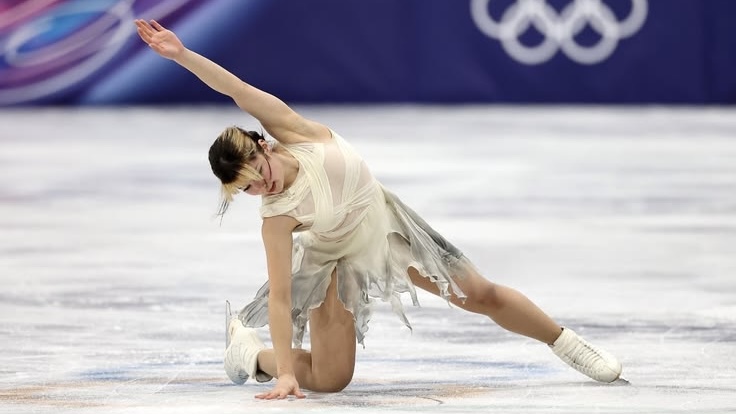
February 19, 2026
The Million-Dollar Medal: Alysa Liu’s Olympic Journey

December 25, 2025
Nancy Kerrigan’s $10 Million Legacy: Success Beyond the Ice
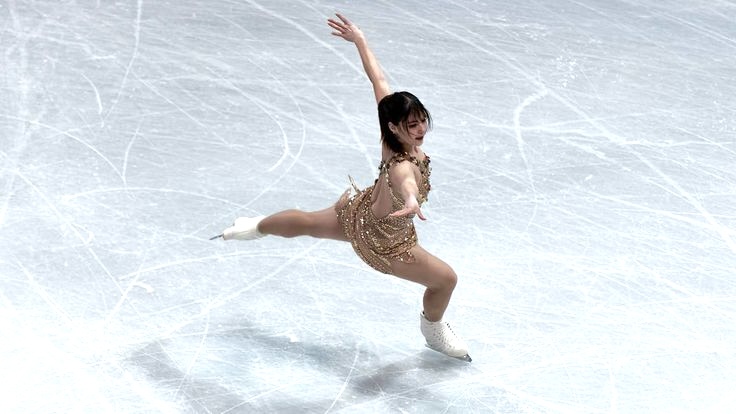
January 08, 2026
2026 U.S. Skating Nationals Results
Competition highlights, industry trends, expert opinions, and stories from athletes and artists worldwide — delivered straight to your inbox