 English
 中文 (中国)
 Español
February 19, 2026
The Million-Dollar Medal: Alysa Liu’s Olympic Journey
April 09, 2025

For elite athletes, every edge counts—speed, power, and recovery can mean the difference between gold and going home empty-handed. While strength and skill grab headlines, flexibility training is the unsung hero quietly powering peak performance. From figure skaters spinning at dizzying speeds to ice hockey players exploding off the line, stretching isn’t just about touching your toes—it’s a strategic tool to unlock potential. Here’s how top athletes in figure skating and ice hockey harness flexibility to dominate, backed by science and real-world grit.
In figure skating, speed is a launchpad for triple Axels and quad jumps. “Flexibility lets me move faster,” says two-time Olympic champion Yuzuru Hanyu, whose fluid spins clock over 300 RPM. Stretching lengthens muscles like the hip flexors and hamstrings, widening stride and boosting glide efficiency. A 2021 Journal of Sports Sciences study found that a 10% increase in hip flexibility improved skating speed by 8%—crucial when milliseconds separate podium spots.
Hockey’s speed demons, like Connor McDavid, rely on flexibility too. Known for hitting 24 mph in bursts, McDavid credits dynamic stretching—leg swings, lunges—to his explosive starts. “It’s about opening the hips,” he’s said. Science agrees: a 2020 Sports Medicine study showed that dynamic stretches before sprints increased stride length by 12%, amplifying acceleration. For both sports, looser muscles mean quicker cuts and sharper turns—speed born from stretch.
Power in figure skating isn’t just muscle—it’s range of motion (ROM). Nathan Chen, the 2022 Olympic gold medalist, lands quads with a pre-jump knee bend deepened by daily hamstring and calf stretches. “The bigger the wind-up, the bigger the pop,” he says. A 2019 Journal of Strength and Conditioning Research study backs this: a 15% ROM boost via stretching increased jump height by 10%, as longer muscles store more elastic energy for takeoff.
In hockey, power translates to slapshots—think Alex Ovechkin’s 100+ mph blasts. Flexibility in the shoulders and core, honed by stretches like arm circles and twists, lets him coil and unleash. “You need that full swing,” Ovechkin notes. A 2022 Biomechanics study found that shoulder flexibility improved stick velocity by 18%, turning stretch into thunderous force. For both athletes, flexibility amplifies power by maximizing the body’s mechanical advantage.
Elite performance demands rapid recovery—stretching delivers. Figure skater Yuna Kim, the 2010 Olympic champ, used post-training static stretches—like pigeon pose for hips—to ease soreness after six-hour sessions. “It keeps me fresh,” she’s said. Science explains why: a 2021 Physical Therapy study showed that 10 minutes of static stretching post-exercise cut muscle stiffness by 20% and boosted blood flow, flushing lactic acid faster.
Hockey’s grind—82 games a season—tests resilience. Sidney Crosby swears by a pre-sleep stretch routine (hamstrings, quads) to rebound for back-to-back games. “It’s how I stay loose,” he says. A 2020 Journal of Sports Rehabilitation study found that nightly stretching reduced next-day fatigue by 15%, aiding muscle repair via growth hormone release during sleep. For both, flexibility speeds recovery, keeping them rink-ready.
Elite athletes don’t stretch haphazardly—it’s deliberate. Hanyu’s pre-competition routine mixes dynamic stretches (high kicks, twists) to prime joints, followed by static holds (splits) to maintain ROM—20-30 minutes total. “It’s my ritual,” he says. McDavid blends 5-minute dynamic warm-ups (lateral lunges) with foam rolling, targeting hips and IT bands, pre-game. Post-game, Crosby holds quad stretches for 30 seconds per side, easing tension after shifts.
Timing’s key. A 2019 British Journal of Sports Medicine review pegged dynamic stretching pre-activity for power (10% speed boost) and static post-activity for recovery (12% less soreness). Overdo it, though—stretching too long before power moves—and strength dips 5%, per a 2021 Sports Health study. Balance is everything.
Stretching isn’t just physical—it steadies the mind. “It calms me before the ice,” Chen says of his pre-skate shoulder rolls. A 2022 Psychology of Sport and Exercise study found that 10 minutes of stretching lowered cortisol by 18%, sharpening focus—vital for nailing a Lutz or dodging a check. Crosby’s quiet stretch moments post-game? “It resets me,” he says—a mental edge in chaos.
For figure skaters and hockey stars, stretching isn’t optional—it’s a performance multiplier. It fuels speed with longer strides, powers jumps and shots with bigger range, and speeds recovery to outlast grueling seasons. Science proves it: flexibility tweaks physics—elasticity, leverage, circulation—turning effort into excellence. Hanyu, McDavid, Kim, Ovechkin, Crosby—they stretch not to bend, but to break records. Lace up, stretch out, and chase your peak—the secrets are in the stretch.
By Vitalina Andrushchenko, Staff Writer
February 19, 2026
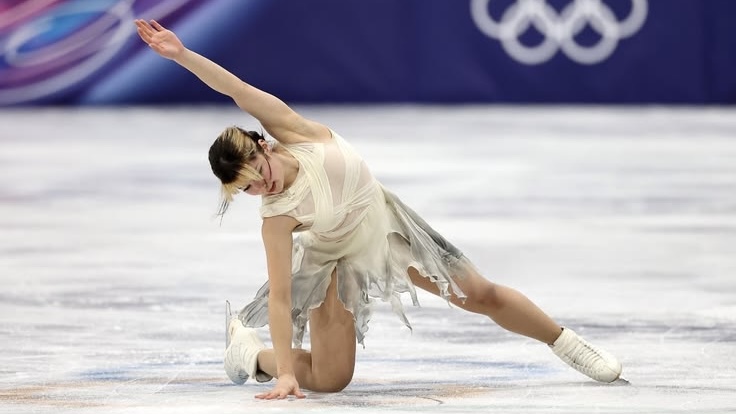
The Million-Dollar Medal: Alysa Liu’s Olympic Journey

December 25, 2025
Nancy Kerrigan’s $10 Million Legacy: Success Beyond the Ice
January 08, 2026
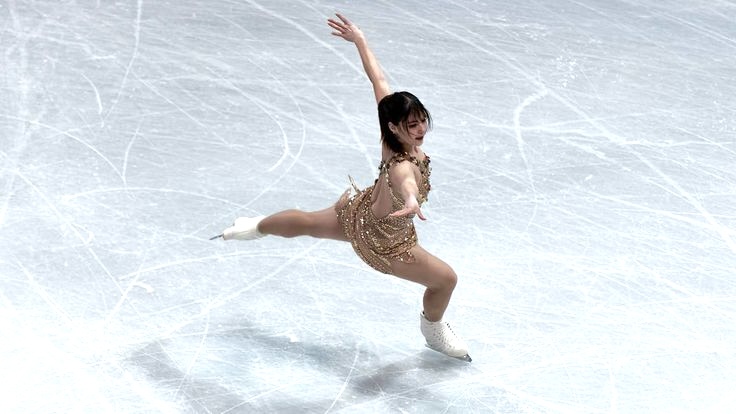
2026 U.S. Skating Nationals Results
Competition highlights, industry trends, expert opinions, and stories from athletes and artists worldwide — delivered straight to your inbox