 English
 中文 (中国)
 Español
February 19, 2026
The Million-Dollar Medal: Alysa Liu’s Olympic Journey
September 09, 2025
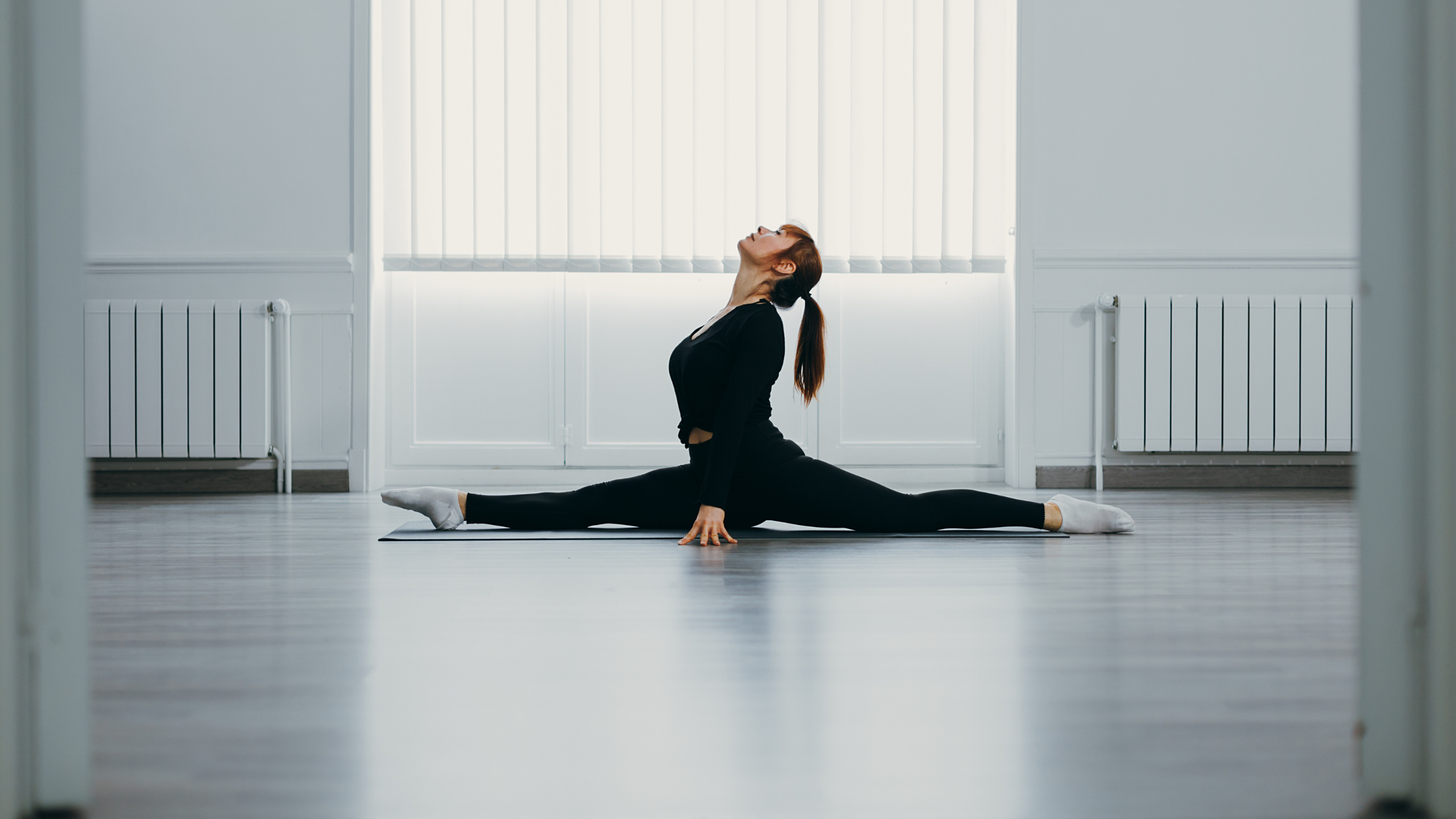
Picture a gymnast soaring through a flawless vault or a soccer player executing a jaw-dropping high kick. What makes these movements so captivating? It’s not just strength or speed—it’s the seamless dance between flexibility and coordination. These two pillars of physical fitness are often discussed in isolation, but they’re more like best friends who bring out the best in each other. Whether you’re an athlete chasing peak performance, a dancer aiming for grace, or someone who just wants to move through life with ease, understanding how flexibility and coordination intertwine can transform the way you think about your body. Let’s dive into why these two qualities are so tightly knit, backed by fascinating facts and their scientific roots.
Flexibility is your body’s ability to stretch and bend, letting muscles and joints glide through their full range of motion (ROM). Think of it as the freedom to reach, twist, or step without feeling like you’re stuck in a straitjacket. Coordination, meanwhile, is the magic of making your body parts work together smoothly—like a conductor leading an orchestra of muscles, joints, and nerves to produce precise, fluid movements.
Fact: Your joints have wildly different ranges of motion. For instance, your shoulder can spin nearly 360 degrees in some directions, while your knee tops out at about 135 degrees of bending. This range is what makes flexibility so crucial for unlocking your joints’ full potential. This comes from biomechanical staples like Neumann, D. A. (2016). Kinesiology of the Musculoskeletal System, which maps out the shoulder’s multi-directional freedom versus the knee’s more limited hinge-like motion.
Imagine trying to dance with stiff hips or walk with rigid ankles—it’s like driving with the parking brake on. Flexibility sets the stage by giving your muscles and joints the space to move freely. Without it, your body compensates, throwing off the rhythm of your movements and making coordination a struggle. For example, tight hamstrings can shorten your stride, forcing your body to work harder and move less smoothly.
Fact: Research shows that limited hip flexibility can cut your stride length by up to 20%, disrupting walking coordination and burning more energy. This insight stems from gait studies, like those in Perry, J., & Burnfield, J. M. (2010). Gait Analysis: Normal and Pathological Function, which connect restricted hip mobility to less efficient movement.
But it’s a two-way street. Coordination helps flexibility by ensuring your muscles fire in harmony. When your movements are sloppy or disjointed, your muscles can’t stretch to their full potential, effectively shrinking your range of motion. It’s like trying to stretch a rubber band while someone’s yanking it in the wrong direction.
Fact: Studies reveal that coordinated muscle patterns can boost joint range of motion by up to 15%, especially in activities like gymnastics or dance. This is backed by research on muscle synergy, such as Latash, M. L. (2008). Synergy, which shows how synchronized muscle activation enhances mobility.
Your nervous system is the mastermind behind this partnership, acting like a switchboard that connects flexibility and coordination. Flexibility isn’t just about stretchy muscles—it’s about your brain’s willingness to let them stretch. The stretch reflex, a built-in safety mechanism, kicks in when muscles are pulled too far, too fast, causing them to contract and limit your range.
Fact: The stretch reflex acts in just 20-40 milliseconds, but over time, your nervous system can learn to relax this reflex, allowing deeper stretches. This is detailed in neurophysiology texts like Kandel, E. R., et al. (2012). Principles of Neural Science, which explains how the reflex adapts.
Coordination, meanwhile, depends on proprioception—your body’s internal GPS that tracks where your limbs are in space. Flexible joints send richer signals to your brain, giving it more data to fine-tune your movements. It’s like upgrading from a blurry map to high-definition GPS for better navigation.
Fact: About 70-80% of the sensory input for complex movements, like those in sports or dance, comes from proprioceptive sensors in muscles and tendons. This is supported by Proske, U., & Gandevia, S. C. (2012). The proprioceptive senses, published in Physiological Reviews.
Watch a gymnast nail a vault: their hips and shoulders stretch to the max, but it’s their pinpoint coordination that ensures a perfect landing. Or consider a soccer player delivering a high kick—their hip flexibility allows the motion, while coordination keeps their balance and aim on point.
Fact: Elite gymnasts can flex their hips beyond 180 degrees, far surpassing the average person’s 120 degrees, enabling feats like flips and splits. This is documented in studies like Sands, W. A., & McNeal, J. R. (2000). A kinematic comparison of gymnasts, which highlight athletes’ extreme joint ranges.
Even everyday tasks showcase this duo. Walking up stairs needs about 20-30 degrees of ankle flexibility to lift your foot, paired with coordination to place it accurately. If either falters, you’re more likely to trip—especially as you age.
Fact: Older adults over 65 with poor ankle flexibility and coordination are 2-3 times more likely to fall. This comes from fall risk studies, like Tinetti, M. E., & Kumar, C. (2010). The effect of mobility limitations on fall risk, in The Gerontologist.
When flexibility and coordination team up, they make your movements efficient and powerful, whether you’re sprinting, dancing, or just carrying groceries. Flexible tissues are less likely to strain, and coordinated movements avoid clumsy mechanics that lead to injury.
Fact: People with strong flexibility and coordination scores have 30-40% fewer musculoskeletal injuries during physical activities. This is backed by research like Hewett, T. E., et al. (2005). Biomechanical measures of neuromuscular control and injury risk, in The American Journal of Sports Medicine.
For long-term health, this partnership is a game-changer. Flexible joints keep you mobile, while coordination keeps you steady, especially as you age. Together, they help you stay active and independent.
Fact: Studies suggest that maintaining flexibility and coordination can delay age-related mobility decline by 5-10 years. This is drawn from Rikli, R. E., & Jones, C. J. (2013). Senior Fitness Test Manual, linking mobility to prolonged independence.
Flexibility and coordination aren’t solo acts—they’re a dynamic duo that powers everything from elite athletic feats to everyday ease. Flexibility gives your body the freedom to move, while coordination ensures those movements are sharp and controlled. Backed by solid science, their connection reveals a fundamental truth: to move better, feel better, and live better, these two need to work hand in hand. Whether you’re chasing a personal best or just aiming to climb stairs without a stumble, their partnership is the key to unlocking your body’s full potential.
Achieve More With VSA: Boost your skills with world-class coaches for just $29/hour. Perfect for skaters, hockey players, dancers, and athletes, VSA offers personalized training 24/7, 365 days a year, anywhere in the world.
By Vitalina Andrushchenko, Staff Writer
February 19, 2026
The Million-Dollar Medal: Alysa Liu’s Olympic Journey

December 25, 2025
Nancy Kerrigan’s $10 Million Legacy: Success Beyond the Ice
January 08, 2026
2026 U.S. Skating Nationals Results
Competition highlights, industry trends, expert opinions, and stories from athletes and artists worldwide — delivered straight to your inbox