 English
 中文 (中国)
 Español
February 19, 2026
The Million-Dollar Medal: Alysa Liu’s Olympic Journey
July 29, 2026
In artistic gymnastics, having a skill named after you is one of the sport’s greatest honors. Under the International Gymnastics Federation (FIG) Code of Points, a gymnast can earn an eponymous skill by successfully performing a new element for the first time at an official FIG competition, such as the Olympic Games or the World Championships. Once the skill is verified by judges, it becomes part of the Code of Points and forever carries the gymnast’s name.
Many of these elements completely changed the direction of gymnastics by introducing new levels of difficulty, originality, and creativity.
(Source: International Gymnastics Federation (FIG) Code of Points)
Simone Biles has more skills named after her than any other active artistic gymnast.
Among the most famous is the Biles II on floor exercise—a triple-twisting double back somersault. The skill combines extraordinary power, air awareness, and precision. Only a handful of gymnasts have attempted it because even a small mistake during landing can lead to significant deductions or injury.
Biles has several additional eponymous skills on vault, balance beam, and floor exercise, reflecting her extraordinary influence on the sport.
What makes Biles’ skills unique is not only their difficulty but also their efficient technique. She generates exceptional height before beginning the twists, giving herself more time to complete complex rotations while maintaining body control.
Olga Korbut amazed the world during the 1972 Olympic Games with an innovative backward salto performed on the balance beam.
The Korbut Flip involved standing on top of the beam before performing a backward somersault to regrasp the apparatus. At the time, audiences had never seen anything similar.
Although the skill is now prohibited because standing on the beam is no longer allowed, it transformed expectations for balance beam difficulty and inspired generations of gymnasts to push technical boundaries.
Yelena Produnova introduced one of the most difficult vaults ever performed.
The vault consists of a handspring onto the table followed by a double front somersault. Because the gymnast cannot see the landing until the final moment, precise timing and exceptional power are essential.
The vault became known as the “vault of death” because unsuccessful attempts can result in dangerous landings. Only a small number of elite gymnasts have successfully competed this skill.
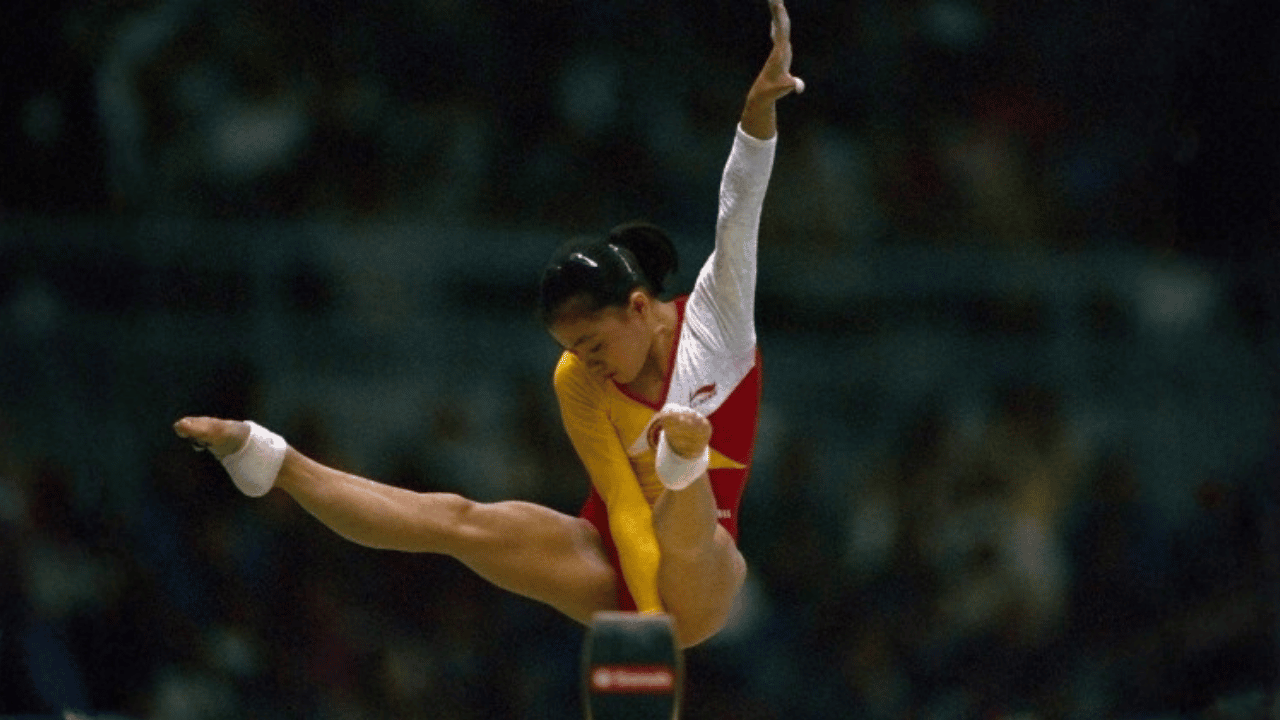
Mo Huilan contributed several innovative uneven bars elements during the 1990s.
One of her best-known skills features a highly complex release movement requiring explosive shoulder power, excellent swing mechanics, and precise regrasp timing.
Her originality helped inspire a new generation of increasingly dynamic uneven bars routines that emphasize flight and continuous movement.
Mitsuo Tsukahara introduced a vault entry that revolutionized both men’s and women’s gymnastics.
The Tsukahara begins with a quarter or half turn onto the vault table before a backward salto. Over time, coaches developed numerous variations that remain widely used in international competition today.
Many elite vaults performed at World Championships and Olympic Games are still based on Tsukahara’s original concept.
More than 200 gymnastics skills are named after athletes in the FIG Code of Points. A gymnast must successfully perform the element without major errors during an official FIG competition before it can receive their name. Some gymnasts have multiple eponymous skills across different apparatus, while others are remembered for a single groundbreaking innovation that permanently changed the sport. New named skills continue to appear as gymnastics evolves, especially during Olympic cycles.
(Source: FIG Code of Points)
The greatest gymnasts did not become famous simply because they performed difficult skills.
They first mastered basic technique, strength, flexibility, body awareness, and consistency before introducing new elements. Coaches emphasize that excellent execution of fundamental skills remains far more important than attempting advanced difficulty too early.
Watching slow-motion videos of elite gymnasts can help athletes understand body alignment, timing, and efficient movement patterns.
Skills named after Olympic gymnasts represent more than individual achievements.
They tell the story of how artistic gymnastics continues to evolve through innovation, courage, and technical excellence. The Biles, Korbut Flip, Produnova, Mo Huilan, and Tsukahara remain lasting reminders that one exceptional performance can influence generations of gymnasts around the world.
Achieve More With VSA: Boost your skills with world-class coaches for just $29/hour. Personalized programs 24/7, 365 days a year, anywhere in the world.
By Vitalina Andrushchenko, Staff Writer
February 19, 2026
The Million-Dollar Medal: Alysa Liu’s Olympic Journey
February 21, 2026
A Guide to Rhythmic Gymnastics Apparatus
February 18, 2026
Ami Nakai Stuns With Triple Axel to Lead Olympic Short Program
Competition highlights, industry trends, expert opinions, and stories from athletes and artists worldwide — delivered straight to your inbox