

 English
 中文 (中国)
 Español


July 29, 2026
5 Skills Named After Olympic Gymnasts
March 05, 2025

How Russian figure skaters overcome fear
Russian figure skaters, like many elite athletes, employ a combination of mental, physical, and strategic techniques to overcome the fear of failure and prepare for competitions. While specific methods can vary depending on the individual skater, their coaches, and the Russian skating system, several common approaches emerge based on their training culture and documented practices.
Mentally, Russian skaters often work on building resilience through rigorous psychological preparation. Coaches and sports psychologists emphasize focus and discipline, helping skaters reframe failure as a learning opportunity rather than a catastrophe. For instance, skaters are taught to visualize their routines—every jump, spin, and transition—repeatedly before stepping onto the ice. This mental rehearsal builds confidence and reduces anxiety by making the performance feel familiar. Skaters like Alina Zagitova and Evgenia Medvedeva, both Olympic medalists, have spoken about the importance of staying calm under pressure, often relying on breathing exercises or pre-competition rituals to center themselves. Medvedeva, for example, has mentioned listening to music or repeating affirmations to block out negative thoughts.
1. Understanding Pre-Competition Anxiety
Even the most talented skaters get nervous before competing. Your hands get sweaty, your legs feel shaky, and suddenly, that jump you land perfectly in practice seems impossible. But nerves don’t mean you’re not ready—they just mean you care! Learning to manage them is key.
2. Mental Preparation Techniques
Visualization is one of the best tools for calming nerves. Before stepping on the ice, close your eyes and imagine yourself landing every jump and skating with confidence. Deep breathing, listening to calming music, and having a pre-competition routine can also help keep your mind in the right place.
3. Turning Adrenaline into Power
Instead of fighting nerves, use them! A little adrenaline can actually help you skate with more energy and focus. If you feel shaky, do quick warm-up exercises like jumping jacks or deep knee bends to get your body moving. Trust your training—your muscle memory will take over.
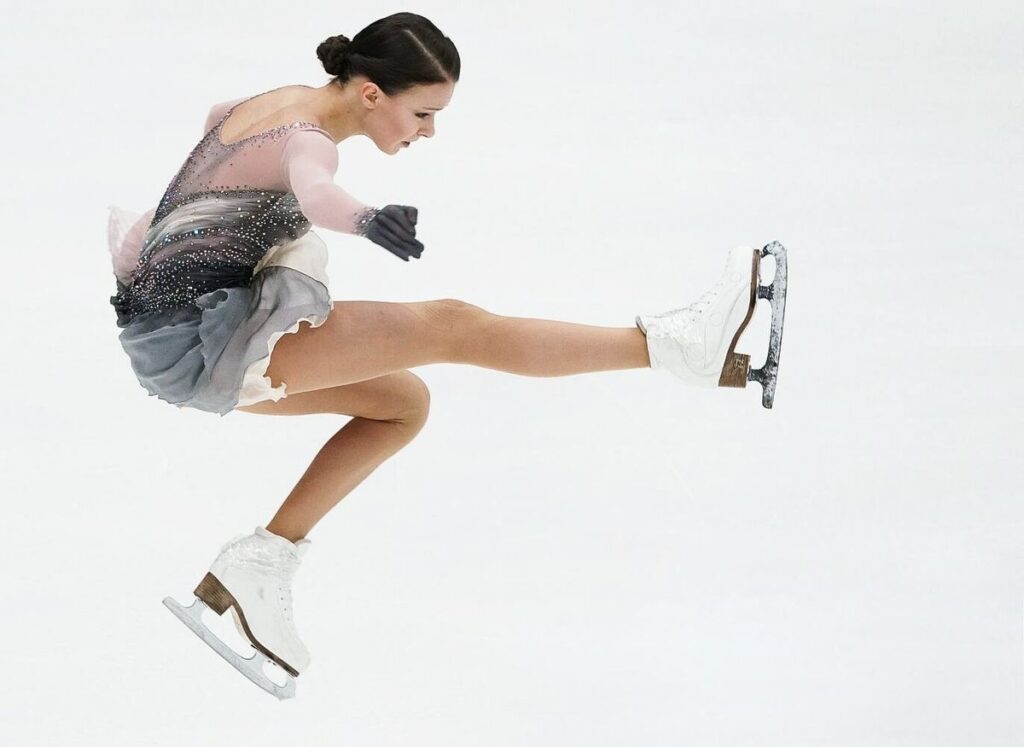
4. Learning from Every Performance
No competition is perfect, and that’s okay. Whether you land everything or fall on the first jump, each event is a learning experience. Watch your performance videos, take notes, and celebrate progress rather than just results. The best skaters aren’t the ones who never fall—they’re the ones who never give up.
Physically, the Russian training system is notoriously intense, which helps skaters conquer fear through sheer repetition and mastery. Coaches like Eteri Tutberidze, a prominent figure in Russian skating, push their athletes to practice difficult elements (like quadruple jumps or complex combinations) far beyond what’s required in competition. This over-preparation ensures that skaters feel secure in their technical abilities, reducing the fear of mistakes. For example, younger skaters like Alexandra Trusova and Anna Shcherbakova, known for their quad jumps, train these elements daily, embedding them into muscle memory so that even under stress, their bodies can execute them instinctively.
Alena Kostornaia, another standout Russian skater, exemplifies the balance between artistry and technical mastery. Known for her exceptional skating skills, fluid transitions, and breathtaking triple Axel, Kostornaia has spoken about the mental and physical challenges of competing at the highest level. Unlike her teammates who specialize in quads, she has relied on impeccable execution and component scores to stay competitive. Her resilience was evident when she transitioned between different coaching teams, adapting to new training environments while maintaining her elite performance. Kostornaia has also emphasized the importance of confidence, often expressing that trusting her preparation allows her to perform under pressure. Her ability to blend elegance with power showcases the multifaceted approach Russian skaters take to overcoming fear—by refining both their technical precision and artistic expression.
Strategically, Russian skaters benefit from a competitive domestic environment that desensitizes them to pressure early on. The depth of talent in Russia means skaters face fierce rivalry at national championships, often tougher than international events. This constant exposure to high-stakes situations—like qualifying for the Russian Nationals—teaches them to cope with nerves and perform consistently. Skaters are also guided to break down their programs into manageable segments, focusing on one element at a time rather than the overwhelming prospect of the entire routine failing.
I’m Support systems play a role too. Coaches, choreographers, and even teammates provide a network that reinforces belief in their abilities. Tutberidze’s “Sambo-70” school, for instance, fosters a collective ethos where skaters push each other, yet also share coping strategies. Post-competition debriefs are common, where skaters analyze what went wrong without dwelling on it emotionally, turning setbacks into actionable steps for improvement.
While fear of failure never fully disappears, Russian skaters are conditioned to channel it into motivation. The cultural emphasis on perfection and national pride—especially with the legacy of Soviet skating excellence—adds pressure but also fuels their drive. They prepare meticulously, trust their training, and lean on mental toughness to step onto the ice ready to compete, not just to avoid failing.
By Vitalina Andrushchenko, Staff Writer
Competition highlights, industry trends, expert opinions, and stories from athletes and artists worldwide — delivered straight to your inbox


