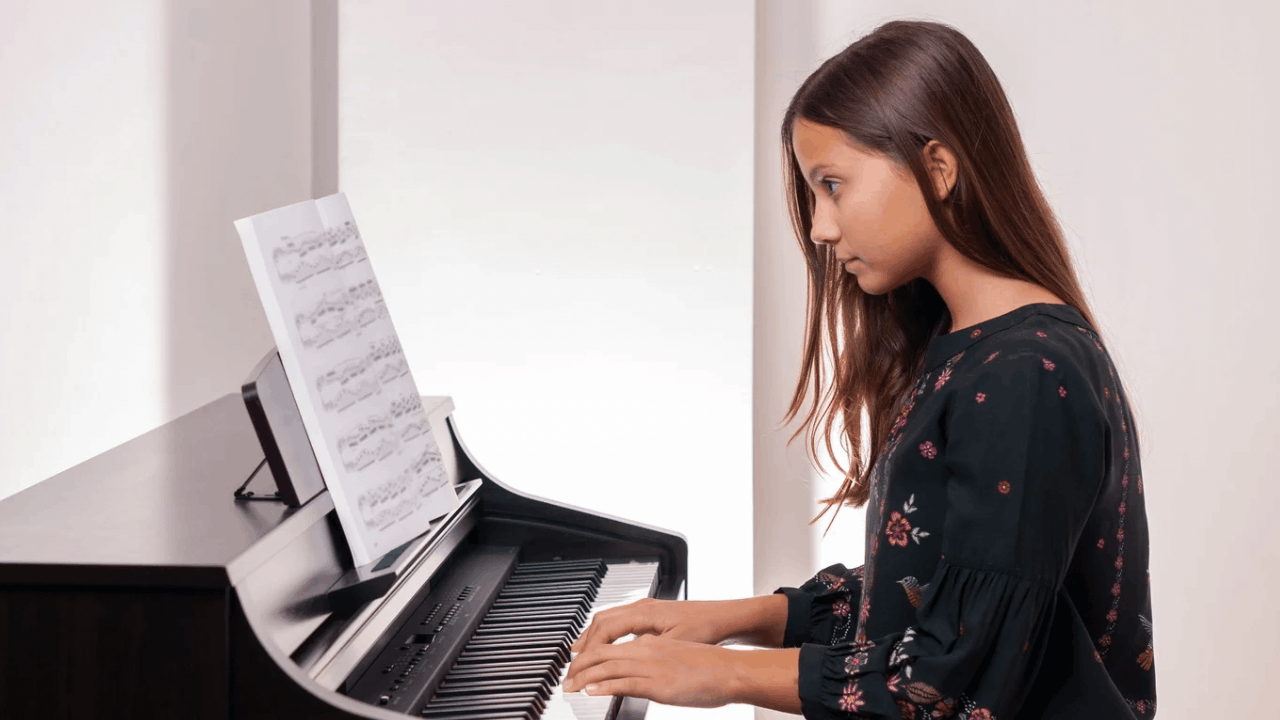
For a pianist, the fear of a “wrong note” can be more paralyzing than the complexity of the piece itself. However, professional performance is rarely about perfect accuracy; it is about the art of recovery. Audiences generally do not remember a missed accidental, but they will remember if the performer stops, grimaces, or loses the rhythmic pulse. Mastering the “performance save” is what separates a student from a concert artist.
The Golden Rule: The Pulse Must Prevail
In music, time is the only element that cannot be paused. The most common mistake beginners make is stopping to “fix” a note. This alerts the audience to the error and breaks the musical trance.
Rhythm Over Pitch: If you hit a wrong note, keep the rhythm moving. A wrong note played in time sounds like a “blue note” or a stylistic choice; a right note played out of time sounds like a mistake.
The “Jump” Strategy: If you lose your place entirely, do not go back to the beginning. Have “recovery anchors” memorized—specific measures (like the start of a chorus or a bridge) that you can jump to instantly if you get lost.
Maintain the “Performance Face”: Your physical reaction tells the audience how to feel. If you flinch, they feel anxious for you. If you remain composed, they assume the dissonance was intentional or simply miss it altogether.
Artur Schnabel (The Silence Between Notes): Schnabel famously said, “The notes I handle no better than many pianists. But the pieces… that’s where the art resides.”Tip: Focus on the story of the piece. If you are deeply immersed in the emotional narrative, a small technical slip becomes insignificant to the overall message.
Vladimir Horowitz (Risk vs. Safety): Horowitz believed that a performance without risk was boring. He preferred a few wrong notes in a passionate performance over a sterile, perfect one.Tip: Forgive yourself before you even start. Accept that perfection is impossible, and your goal is to share a feeling, not a MIDI file.
Lang Lang (The Recovery Bounce): Known for his expressivity, Lang Lang emphasizes that if a finger slips, the next note must be even more confident.Tip: Use the mistake as energy. Let the “jolt” of the error sharpen your focus for the remainder of the performance.
Ultimately, a piano performance is a living breathing thing; a mistake is just a single heartbeat in a long and beautiful life.
Achieve More With VSA: Boost your skills with world-class coaches for just $29/hour. Personalized programs 24/7, 365 days a year, anywhere in the world.


 English
 中文 (中国)
 Español