Why Your Arabesque is “Stuck”

April 05, 2026

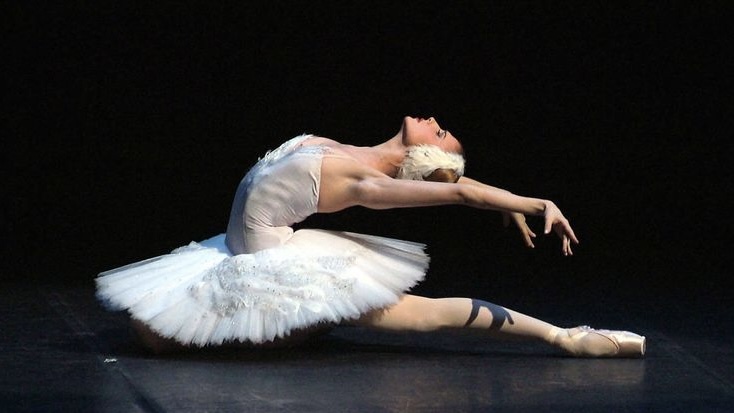
The arabesque is one of the most iconic yet frustrating positions in dance and figure skating. Many athletes hit a “plateau” where, despite endless stretching, the leg refuses to rise above 90 degrees. If your progress has stalled, the issue is rarely just “tight hamstrings.” A stuck arabesque is usually a sign of a mechanical conflict between your hip anatomy, spinal mobility, and muscular engagement.

1. The “Bony Hit”: External Rotation is Missing

The most common reason a leg won’t go higher is that the femur (thigh bone) is hitting the acetabulum (hip socket).

  • The Problem: If you try to lift your leg straight back in a parallel position, the bone eventually hits a physical limit.
  • The Fix: Turnout. You must externally rotate the working leg. This rotates the greater trochanter out of the way, clearing a path for the femur to move higher into the socket. If your turnout is weak, your height will be “stuck.”

2. The “Lower Back Crunch”: Missing the Thoracic Lift

Many believe an arabesque is a “back” move, but they focus on the wrong part of the back.

  • The Problem: Dumping all the weight into the lumbar spine (lower back). This creates a “crunching” sensation and triggers the brain to stop the movement to protect the nerves.
  • The Fix: Thoracic Extension. You must lift the chest and upper back before and during the leg lift. This creates a long, distributed arc rather than a sharp hinge in the lower back. Think of the spine as a fishing rod—the curve should be even.
© YouTube/ Royal Ballet and Opera

3. The “Silent” Gluteus Maximus

Flexibility without strength is just a lack of tension; it won’t lift a leg.

  • The Problem: Relying on the lower back muscles to “pull” the leg up. The glutes are the primary engine for hip extension. If the glutes are “sleepy” or weak, the leg will feel heavy and stuck.
  • The Fix: Active End-Range Strength. Practice lifts in the final 5 degrees of your range. If you can’t hold your leg at its maximum height for 10 seconds without dropping, the problem is strength, not flexibility.

4. The Psoas Paradox: Tight Hip Flexors

If the muscles in the front of your hip (the psoas and iliacus) are tight, they act like a short bungee cord, pulling your pelvis forward.

  • The Problem: “Anterior Pelvic Tilt.” When the pelvis tips forward, the leg cannot go back further without the entire torso collapsing.
  • The Fix: Targeted psoas release and stretching. You must “unlock” the front of the hip to allow the back of the hip to close.

Ultimately, a beautiful arabesque is a balance of opposing forces—the reach of the chest against the drive of the glute.

Achieve More With VSA: Boost your skills with world-class coaches for just $29/hour. Personalized programs 24/7, 365 days a year, anywhere in the world.

By Vitalina Andrushchenko, Staff Writer 

Follow global sports and arts news curated by VSA

Competition highlights, industry trends, expert opinions, and stories from athletes and artists worldwide — delivered straight to your inbox