 English
 中文 (中国)
 Español
February 19, 2026
The Million-Dollar Medal: Alysa Liu’s Olympic Journey
July 14, 2026
For many figure skaters, the first competition feels more challenging mentally than physically. Even if you can perform your program well in practice, competing in front of judges and an audience introduces new emotions. Nervousness is completely normal, and even Olympic champions experience it before stepping onto the ice.
Mental preparation is not about eliminating fear—it is about learning how to perform despite it.
Before a competition, your body releases adrenaline. Your heart beats faster, your hands may feel cold, your breathing changes, and your muscles can feel either tense or unusually energetic.
These reactions are part of your body’s natural response to an important event. Instead of thinking, “I’m too nervous,” try telling yourself, “My body is getting ready to perform.”
Sports psychology research shows that athletes who view nerves as excitement often perform more consistently under pressure.
(Source: International Journal of Sport and Exercise Psychology)
Elite skaters rarely leave competition day to chance.
Create a simple routine that you repeat before every event. Wake up at the same time, eat familiar foods, stretch gently, listen to music that helps you focus, review your choreography, and complete the same warm-up sequence before stepping onto the ice.
Following familiar routines gives your brain a sense of control, reducing unnecessary anxiety.
Thinking about medals or placements often increases pressure.
Instead, choose three controllable goals such as maintaining strong posture throughout the program, landing the opening jump with confidence, keeping your speed through step sequences, or smiling during your choreography.
Small process goals help you stay focused on performance rather than results.
Training should occasionally feel like competition.
Ask your coach to simulate a competition by playing your music only once, inviting teammates to watch, wearing your costume during practice, or asking someone to announce your name before you skate.
The more often you experience pressure in practice, the more familiar competition will feel.
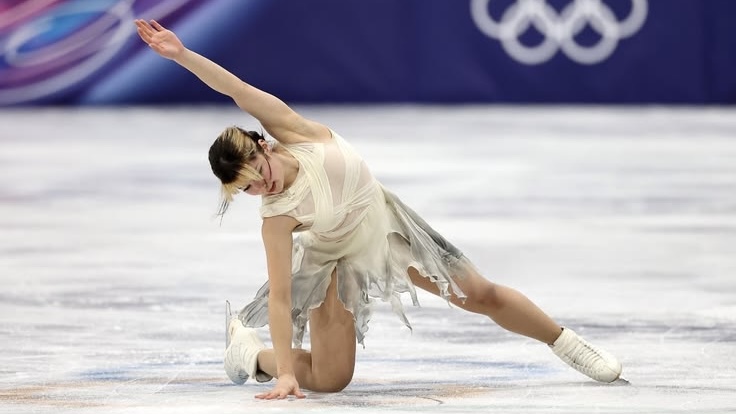
Every skater makes mistakes—even world champions.
One missed jump does not determine the entire program. Train yourself to immediately shift your attention to the next element instead of replaying the mistake in your mind.
Many successful performances include small errors that most spectators never notice because the skater continues performing confidently.
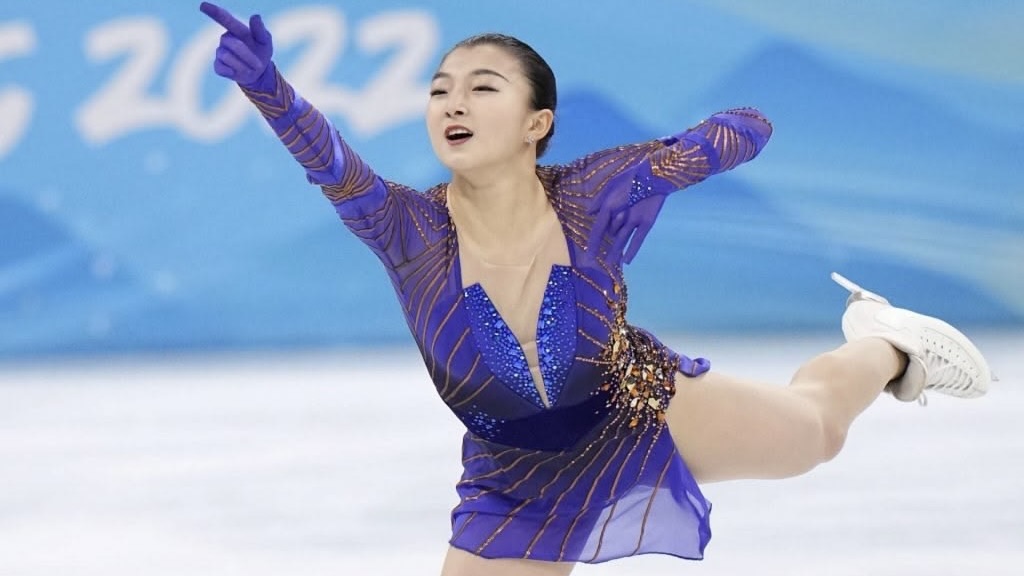
Kaori Sakamoto is widely recognized for her ability to stay composed under competitive pressure. Throughout multiple World Championships and Olympic competitions, she demonstrates excellent emotional recovery during performances. Even when minor technical mistakes occur, she rarely allows them to affect the choreography that follows. Her strong skating skills, confident posture, and continuous performance quality show the importance of remaining mentally engaged from the first movement until the final pose. This ability to recover quickly is one reason she consistently performs well at major international events.
Visualize yourself skating a successful program every day, practice slow breathing before training sessions, keep a competition journal to record what worked well after each event, replace negative thoughts with simple performance cues, and remember that every competition is an opportunity to gain experience rather than prove your worth.
Many national figure skating teams include sport psychologists as part of their coaching staff. Athletes regularly practice visualization, breathing exercises, concentration techniques, and pre-performance routines alongside their physical training because mental preparation is considered an essential part of elite performance.
(Source: International Skating Union athlete education resources)
Your first competition is not about skating perfectly.
It is about learning how to perform under pressure, gaining valuable experience, and building confidence for future events. Every competition teaches lessons that cannot be learned during practice alone, and each one helps you become a stronger and more confident skater.
Achieve More With VSA: Boost your skills with world-class coaches for just $29/hour. Personalized programs 24/7, 365 days a year, anywhere in the world.
By Vitalina Andrushchenko, Staff Writer
February 19, 2026
The Million-Dollar Medal: Alysa Liu’s Olympic Journey
February 21, 2026
A Guide to Rhythmic Gymnastics Apparatus
February 18, 2026
Ami Nakai Stuns With Triple Axel to Lead Olympic Short Program
Competition highlights, industry trends, expert opinions, and stories from athletes and artists worldwide — delivered straight to your inbox