 English
 中文 (中国)
 Español
February 19, 2026
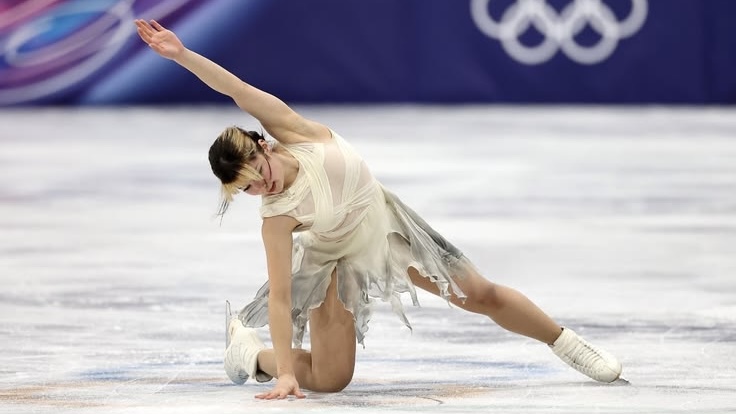
The Million-Dollar Medal: Alysa Liu’s Olympic Journey
August 13, 2026

Learning to play the piano is not only about developing finger technique and memorizing pieces. Understanding music theory gives pianists a clearer picture of how music works and can make learning, practicing, and performing much more effective.
Whether you are a beginner or an experienced pianist, a strong foundation in music theory can help you recognize patterns, understand musical structure, and make more informed interpretive decisions.
Here are five essential music theory concepts every pianist should understand.
Scales are one of the foundations of Western music. A scale is an organized sequence of notes built around a particular starting point, or tonic.
Understanding major and minor scales helps pianists recognize the key of a piece and understand which notes, chords, and harmonies are likely to appear.
For example, a piece in C major uses the notes of the C major scale as its basic tonal framework. Once a pianist understands this relationship, reading the music becomes more logical rather than feeling like a collection of unrelated notes.
Practicing scales can also improve finger coordination and help pianists become more familiar with the keyboard.
An interval is the distance between two notes.
Learning to recognize intervals is extremely useful for pianists because melodies, chords, and harmonies are all built from relationships between notes.
For example, a major third consists of four semitones, while a perfect fifth consists of seven semitones. Being able to recognize these distances both visually and by ear can make reading music and learning pieces much easier.
Interval training can also improve a pianist’s ear, helping them identify melodies and harmonies without relying entirely on sheet music.
Chords are combinations of notes played together, and they provide much of the harmonic foundation of a piece.
Pianists should understand how basic triads are constructed and how chords relate to the key of a piece. Learning common chord progressions can make harmonic patterns easier to recognize.
For example, the progression I–IV–V is common in many styles of music. In C major, these chords are C major, F major, and G major.
Understanding Roman numeral analysis also allows pianists to recognize the function of chords rather than simply memorizing their names.
A pianist can play every correct note and still give an unconvincing performance if the rhythm is inaccurate.
Rhythm determines when notes occur and how long they last, while meter organizes beats into recurring patterns of strong and weak accents.
Understanding concepts such as time signatures, subdivisions, syncopation, rests, and note values helps pianists maintain a stable pulse and interpret music more accurately.
Good rhythmic understanding is especially important when playing with other musicians. A pianist needs to know not only where their notes occur, but also how their part fits into the larger musical structure.
Musical form describes how a composition is organized.
Recognizing structures such as binary form, ternary form, rondo, theme and variations, and sonata form can help pianists understand where a piece is going.
Instead of approaching a long composition as a sequence of individual measures, the pianist can identify larger sections and recognize repetitions, contrasts, and developments.
This understanding can also improve memorization. When a pianist knows why a section returns or how one musical idea develops into another, the piece becomes easier to remember and perform with intention.
Music theory should not be viewed as a separate academic subject disconnected from playing. It is a practical tool that helps musicians understand what they are performing.
A pianist who understands scales can recognize keys. A pianist who understands intervals can read melodies more efficiently. A pianist who understands chords can recognize harmonic patterns. A strong sense of rhythm improves coordination, while knowledge of form gives a piece a larger musical structure.
The more these concepts become familiar, the less a pianist has to rely on memorization alone.
Ultimately, music theory helps transform piano playing from simply reproducing notes into understanding the language behind the music.
Achieve More With VSA: Boost your skills with world-class coaches for just $29/hour. Personalized programs 24/7, 365 days a year, anywhere in the world.
By Vitalina Andrushchenko, Staff Writer
February 19, 2026
The Million-Dollar Medal: Alysa Liu’s Olympic Journey

July 29, 2026
5 Skills Named After Olympic Gymnasts

February 21, 2026
A Guide to Rhythmic Gymnastics Apparatus
Competition highlights, industry trends, expert opinions, and stories from athletes and artists worldwide — delivered straight to your inbox