

 English
 中文 (中国)
 Español


July 29, 2026
5 Skills Named After Olympic Gymnasts
April 12, 2026
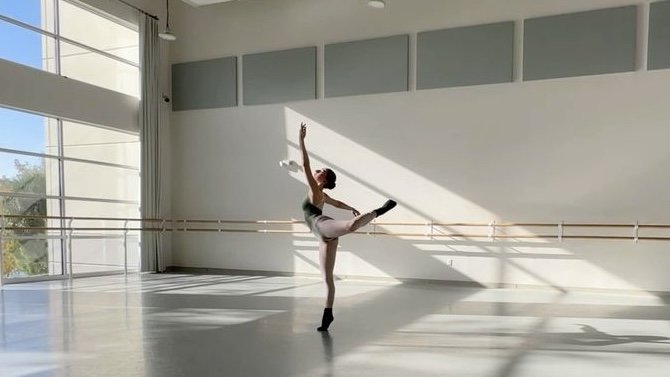
Flexibility is one of the most recognizable qualities of a ballet dancer. Deep splits, high extensions, and fluid movement often look effortless on stage. However, these results are not just a product of natural flexibility — they come from very specific stretching habits developed over years of training.
Understanding how ballet dancers stretch can help students improve faster, stay safe, and build long-term flexibility instead of short-term results.
Before any deep stretching, ballet dancers always prepare their bodies. Muscles need to be warm to stretch safely and effectively.
A typical warm-up might include light cardio, joint mobility, or basic barre exercises. Stretching cold muscles increases the risk of injury and limits progress.
For students, this is one of the most important habits to adopt. Even a short 5–10 minute warm-up can make a significant difference in both safety and results.
Reaching a split is not the only goal. Ballet dancers pay close attention to body alignment:
A deeper stretch with poor alignment is less effective and can lead to bad habits or injury. Clean technique always comes first.
Instead of forcing flexibility, ballet dancers use controlled breathing to go deeper.
They avoid tension in the shoulders and face, allowing the body to gradually release into the stretch. This approach improves flexibility more sustainably and reduces the risk of strain.
For students, learning to relax is often harder than pushing harder — but it is much more effective.
Ballet dancers do not rely on one long, intense stretching session. Instead, they stretch regularly — often daily.
Consistency allows the body to adapt gradually. Short, frequent sessions are more effective than occasional extreme effort.
This is why progress in ballet flexibility may seem slow, but it is stable and long-lasting.
Flexibility alone is not enough in ballet. Dancers always combine stretching with strength work to support their range of motion.
For example:
This balance prevents injuries and allows dancers to actually use their flexibility in movement.
Ballet stretching is not about forcing the body into extreme positions. It is a structured, mindful process that combines preparation, technique, breathing, consistency, and strength.
Achieve More With VSA: Boost your skills with world-class coaches for just $29/hour. Personalized programs 24/7, 365 days a year, anywhere in the world.
By Vitalina Andrushchenko, Staff Writer
Competition highlights, industry trends, expert opinions, and stories from athletes and artists worldwide — delivered straight to your inbox


