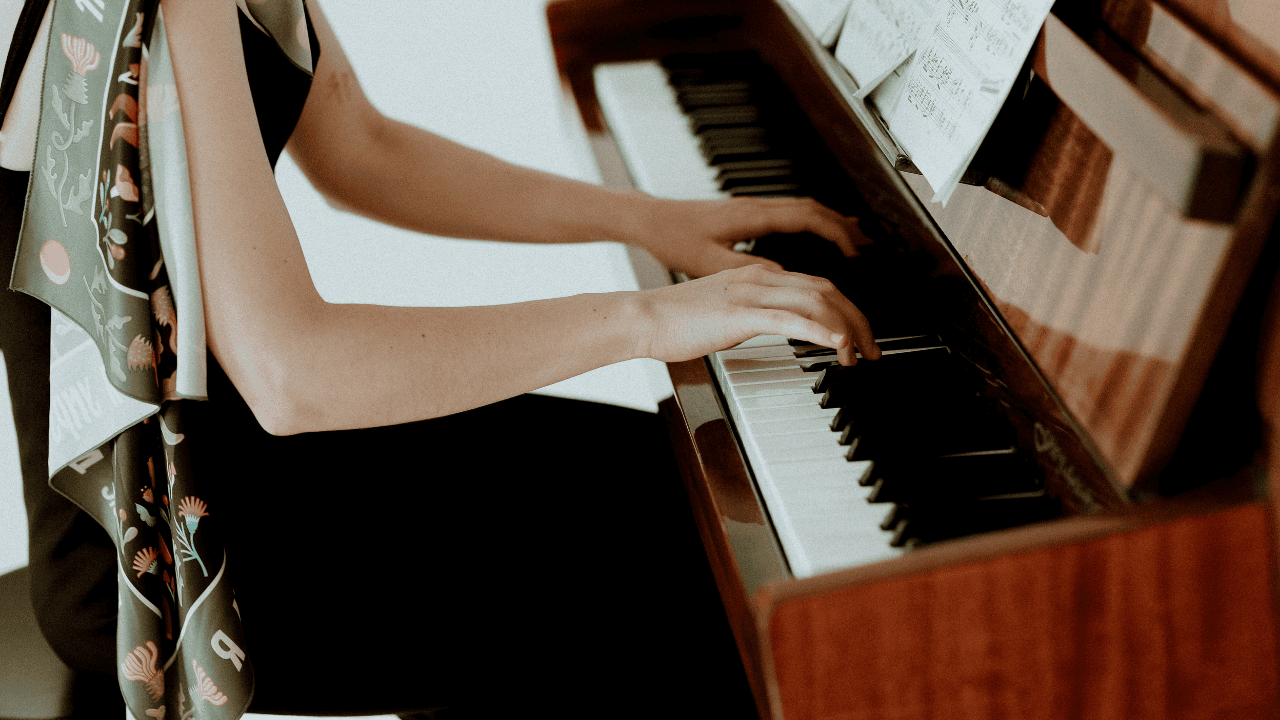
Daily Habits of Successful Pianists

April 10, 2026

Success at the piano is rarely the result of a single “lightning bolt” of inspiration. Instead, it is built through the compounding interest of daily rituals. Professional pianists view their practice not as a chore, but as an athletic and artistic maintenance program. To move beyond the amateur level, one must adopt the habits that allow for consistent, high-level output without burnout.


1. The “Deep Warm-up” Ritual

Successful pianists never dive straight into their most difficult repertoire. They treat their hands like elite athletes treat their muscles.

  • The Habit: Devoting the first 15–20 minutes to technical foundations—scales, arpeggios, or Hanon/Czerny exercises.
  • The Goal: This isn’t just about finger speed; it’s about “calibrating” the touch and listening to the acoustics of the room. It centers the mind and prepares the nervous system for complex coordination.
© YouTube/ Teen Vogue

2. Slow Practice (The 50% Rule)

One of the most counterintuitive habits of masters is their willingness to play slowly.

  • The Habit: Practicing difficult passages at half-speed, even when they can play them at full tempo.
  • The Goal: Slow practice forces the brain to process every individual note and finger movement. It eliminates “muscle memory blur”—those sections where you rely on habit rather than conscious control. If you can’t play it perfectly slow, you don’t truly know it fast.

3. Deliberate “Sectional” Focus

Amateurs often play a piece from beginning to end, stopping only when they make a mistake. Professionals do the opposite.

  • The Habit: Identifying the 2–4 “problem measures” and practicing them in isolation for the majority of the session.
  • The Goal: By the time a successful pianist sits down for a full run-through, the hardest parts have already been mastered. They prioritize the “weakest links” to ensure the entire musical chain is unbreakable.

4. The “Mental Playthrough”

Great pianists spend significant time away from the keys.

  • The Habit: Visualizing the score or “fingering” the notes on a flat surface while traveling or resting.
  • The Goal: This strengthens the neurological pathways without the physical fatigue of playing. It ensures that the music is stored in the “conceptual” brain, not just the “mechanical” hands.

Ultimately, the piano is a mirror; it reflects the consistency of your character. The best pianists don’t practice until they get it right; they practice until they can’t get it wrong.

Achieve More With VSA: Boost your skills with world-class coaches for just $29/hour. Personalized programs 24/7, 365 days a year, anywhere in the world.

By Vitalina Andrushchenko, Staff Writer 

Follow global sports and arts news curated by VSA

Competition highlights, industry trends, expert opinions, and stories from athletes and artists worldwide — delivered straight to your inbox