 English
 中文 (中国)
 Español
July 29, 2026
5 Skills Named After Olympic Gymnasts
September 24, 2026
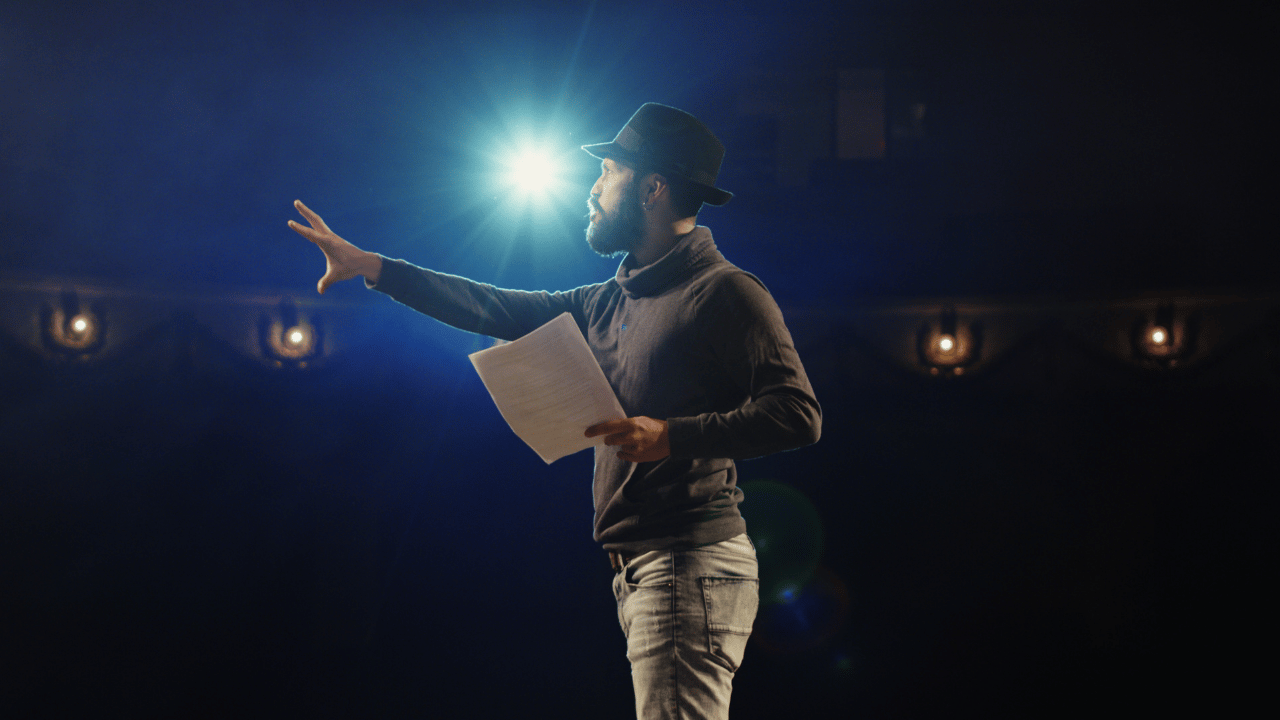
A great film performance can feel completely natural, but there is often a surprising amount of technical precision behind it. One of the most important skills actors learn on camera is eyeline discipline — knowing exactly where to look, when to look there, and how to keep that gaze consistent from one shot to another.
For an audience, eye contact may seem instinctive. For an actor, however, the position of the eyes can affect everything from continuity and editing to the emotional meaning of a scene.
An eyeline is the direction in which an actor looks while performing.
If an actor is talking to another character who is standing just outside the frame, they usually look toward a specific point near the camera rather than directly into the lens. That point might be marked by the other actor, a stand-in or a piece of tape.
This becomes especially important during close-ups.
Imagine a conversation between two characters. In one shot, Character A looks slightly to the left of the camera toward Character B. When the camera cuts to Character B, B should generally look in the opposite direction — creating the visual impression that they are looking at each other.
If both actors look in the same direction, the geography of the scene can suddenly feel wrong.
Film is constructed from individual shots rather than recorded as one continuous performance. Directors may shoot the same scene multiple times from different angles, and editors later combine those shots into a finished sequence.
The actor therefore needs to maintain a consistent visual relationship with the other character.
A small change in eyeline can make an actor appear to look at a completely different person, even when the dialogue remains identical.
It can also change the emotional interpretation of a moment.
Looking directly toward someone can suggest intimacy or confrontation. Looking slightly away may communicate hesitation, discomfort or avoidance. Looking beyond them can suggest that the character is distracted or focused on something else.
Eyeline discipline is closely connected to screen direction and the 180-degree rule.
Imagine an invisible line connecting two actors. When filming their conversation, the camera normally stays on one side of that line. This helps maintain consistent spatial relationships.
If Character A is looking screen right toward Character B, the reverse shot will generally show Character B looking screen left toward A.
Actors don’t need to understand every technical decision happening behind the camera, but they do need to understand their specific eyeline.
The goal is not simply to “look at the other actor.” It is to hit the correct visual target for the shot.
Film acting is different from stage acting because the camera can be extremely close.
During a close-up, looking directly into another actor’s eyes can sometimes mean looking too close to the lens or creating an unintended visual effect.
Instead, the actor might be asked to look at a point just beside the camera.
This can feel strange at first. The important part is to avoid making the adjustment visible to the audience. The actor should still behave as if they are genuinely looking at the character.
One useful technique is to treat the eyeline as part of the imaginary world of the scene. Don’t think, “I have to look at this piece of tape.” Think, “That person is standing there.”
Good eyeline discipline isn’t only about delivering dialogue.
Actors also need to maintain their visual relationship while listening.
A reaction shot may contain no dialogue at all, yet the direction of the actor’s eyes tells the audience where their attention is. A tiny change in focus can communicate surprise, suspicion, attraction or fear.
This is one reason experienced screen actors can appear incredibly expressive without making large movements.
The eyes become part of the performance.
Try filming the same short dialogue from three different camera positions.
First, identify your eyeline. Place a small mark near the camera where your scene partner would be.
Then repeat the scene while maintaining that point.
Afterward, watch the footage without sound.
Can you tell who the character is talking to? Does the emotional connection remain consistent between shots?
This simple exercise can reveal how much information the eyes communicate.
On a film set, actors may hear instructions such as:
“Look just off camera.”
“Hit your mark, then find your eyeline.”
“Hold your eyeline.”
“Don’t look into the lens.”
These instructions are not about making the performance mechanical. They allow the actor’s performance to survive the technical process of filmmaking.
The best eyeline discipline becomes almost invisible. The audience doesn’t notice that the actor is hitting a precise mark. They simply believe that two characters are looking at each other.
For screen actors, technical control gives emotional freedom. The more confidently an actor can manage their eyeline, the more attention they can give to the character, the relationship and the moment.
Achieve More With VSA: Boost your skills with world-class coaches for just $29/hour. Personalized programs 24/7, 365 days a year, anywhere in the world.
By Vitalina Andrushchenko, Staff Writer
July 29, 2026
5 Skills Named After Olympic Gymnasts
March 24, 2026
2026 World Figure Skating Championships in Prague
May 24, 2026
How to Improve Toe Point in Ballet
Competition highlights, industry trends, expert opinions, and stories from athletes and artists worldwide — delivered straight to your inbox