

 English
 中文 (中国)
 Español


July 29, 2026
5 Skills Named After Olympic Gymnasts
April 04, 2026
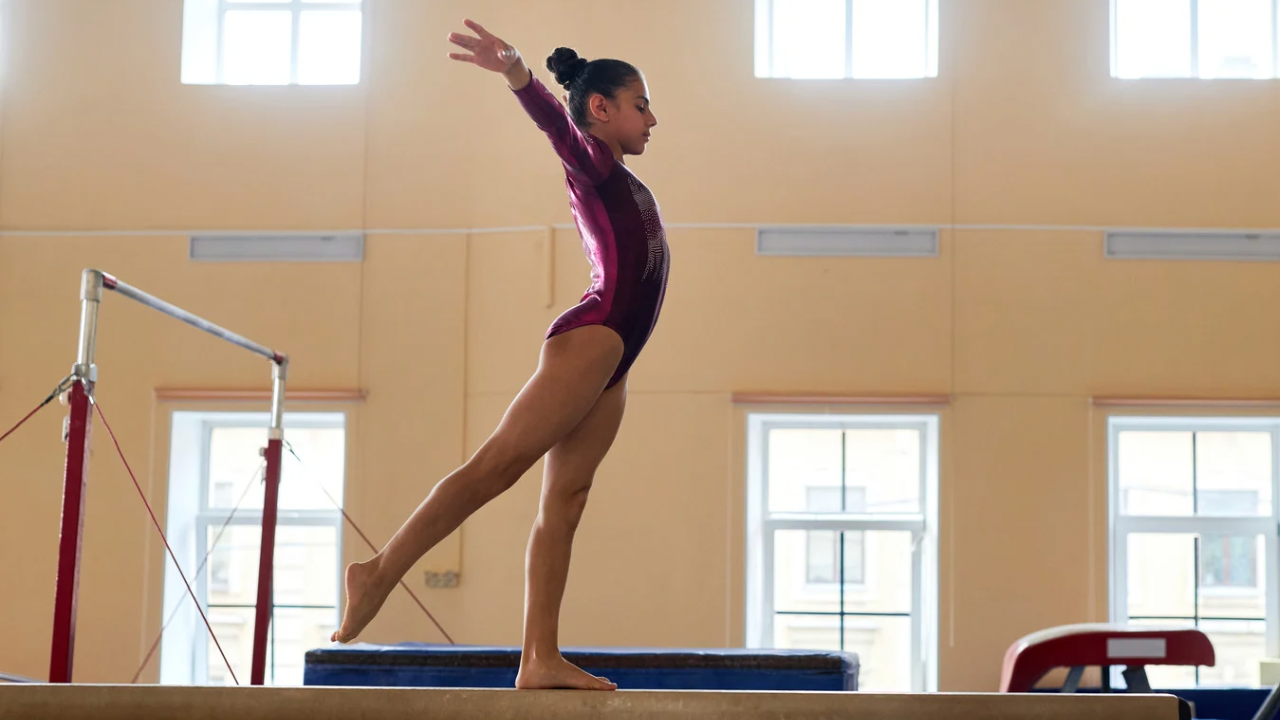
In artistic gymnastics, the transition from a beginner (Recreational/Level 1-3) to an intermediate athlete (Level 4-7) is often misunderstood as simply “learning harder flips.” While the skills certainly become more spectacular, the most profound changes occur beneath the surface. The shift is defined by a total restructuring of body tension, spatial awareness, and the “physics” of movement.
A beginner often forces movements using raw strength—muscling their way through a pull-up or a leg lift. An intermediate gymnast learns to utilize momentum and leverage.
Beginners are taught the “hollow body” shape (rounded back, tucked ribs). However, an intermediate gymnast masters the Active Hollow.
Beginners often experience “sensory blackout” the moment their feet leave the ground; they close their eyes or lose track of where the floor is.
To a beginner, a handstand is just being upside down. To an intermediate gymnast, a handstand is a precise vertical column.
Ultimately, moving to the intermediate level is about shifting from “doing gymnastics” to “being a gymnast”—where every muscle fiber is under conscious control.
Achieve More With VSA: Boost your skills with world-class coaches for just $29/hour. Personalized programs 24/7, 365 days a year, anywhere in the world.
By Vitalina Andrushchenko, Staff Writer
Competition highlights, industry trends, expert opinions, and stories from athletes and artists worldwide — delivered straight to your inbox


