

 English
 中文 (中国)
 Español


July 29, 2026
5 Skills Named After Olympic Gymnasts
December 08, 2025
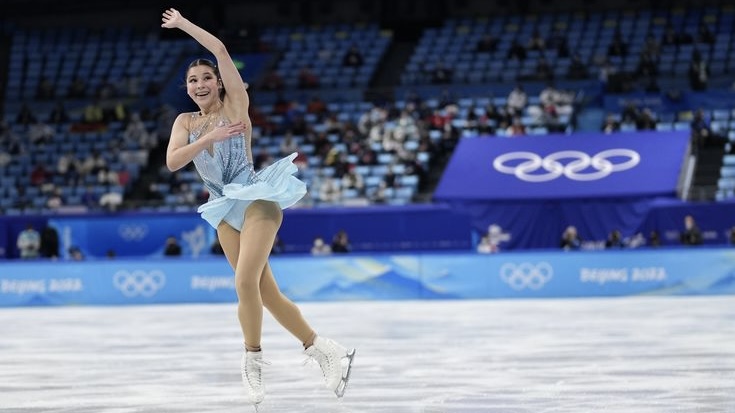
The blades have stilled at Nagoya’s Aichi Arena, but the echoes of the 2025 ISU Grand Prix Final are still reverberating through the figure skating world. Over three electrifying days (December 4-7), the sport’s top talents clashed in a preview of the Milano Cortina 2026 Olympics, delivering historic highs, heartbreaking slips, and enough drama to fuel a Netflix series. With the curtain down on the Grand Prix series, what did we learn about the athletes who’ll define next February’s Winter Games? Buckle up—the road to Italy just got a lot more thrilling.
If Ilia Malinin wasn’t already the undisputed “Quad God,” Nagoya sealed it. The 21-year-old American stumbled in the short program with a wobbly quad Axel-triple toe, dropping to third behind Japan’s Yuma Kagiyama (108.77 PB) and Shun Sato (98.06). But the free skate? Pure sorcery. Malinin unleashed a flawless seven-quad onslaught – the first ever in competition – shattering his own world record with 345.26 total points, a 30-point demolition of Kagiyama’s silver (315.12). “It’s not just about the jumps; it’s about owning the ice,” Malinin said post-medal, eyes already on Chen’s 335.30 all-time mark.
Takeaway: Malinin’s Olympic gold feels inevitable. Two clean programs in Milano could rewrite history, but watch for Kagiyama’s resilience – his home-crowd PB shows he’s no also-ran. The U.S. star’s seven-quad blueprint raises the bar: expect copycats (and crashes) across the field.
Alysa Liu’s Grand Prix Final debut was a statement: 222.49 total points for gold, edging Japan’s teenage sensation Ami Nakai (220.89 silver) by under two points. The reigning world champ’s free skate (148.09) was a masterclass in precision, blending triple-triples with effortless spins. Bronze went to Kaori Sakamoto (218.80), who clawed back from fifth in the short with a stunning 149.40 free – her season’s best. Mone Chiba’s short lead evaporated into fifth (212.34), while Rinka Watanabe (209.12) and Amber Glenn (207.56) rounded out the field.
Takeaway: Liu’s back – and dangerous – but the women’s race is wide open. Japan’s depth is terrifying: Nakai’s rookie fire, Sakamoto’s veteran grit, and Chiba’s potential could flood Milano’s podium. Add U.S. threats like Glenn and Isabeau Levito, plus qualifier Adeliia Petrosian, and it’s anyone’s Games. The real wildcard? Nationals in two weeks: if junior phenom Mao Shimada (four-time JGP Final champ, ineligible for 2026) upsets the seniors, Japan’s selectors face a delicious dilemma.
Riku Miura and Ryuichi Kihara turned Nagoya into their personal victory lap, reclaiming Grand Prix Final gold (225.21 total) after three years away. Their short was flawless, but a free-skate wobble (147.89, second to Germany’s Minerva Fabienne Hase/Nikita Volodin at 152.34) nearly handed the win to the Germans (silver, 224.67). Italy’s Sara Conti/Niccolo Macii snatched bronze (218.45) with a PB free, while U.S. vets Deanna Stellato-Dudek/Maxim Nikitin (fifth, 210.12) showed flashes amid falls.
Takeaway: Japan’s trailblazers are frontrunners for the country’s first Olympic pairs medal, but this season’s five different GP winners scream volatility. Hase/Volodin’s power and Conti/Macii’s flair mean one slip could swap podiums. Milano’s pairs event just got a plot twist: expect throws that defy gravity and lifts that steal breaths.
Madison Chock and Evan Bates etched their name deeper into history with a third straight Grand Prix Final gold (220.42 total), rewriting their free-dance best (131.68) to hold off a fierce challenge. France’s Laurence Fournier Beaudry/Guillaume Cizeron – the Beijing gold medalist with ex-partner Gabriella Papadakis – narrowed a one-point short deficit but slipped to silver (218.76) with a minor twizzle error. Canada’s Piper Gilles/Paul Poirier took bronze (215.34).
Takeaway: Chock/Bates are dynasty material, their seamless synchronicity a blueprint for Olympic glory. But Cizeron’s new partnership is a sleeping giant – that near-upset hints at payback in Milano. With Gilles/Poirier’s creativity lurking, ice dance’s gold could hinge on a single twizzle. The U.S. duo’s three-peat cements them as favorites, but underdogs are sharpening their blades.
Nagoya wasn’t just a finale; it was a crystal ball. Malinin’s quads signal a men’s field chasing impossibility, while women’s parity promises chaos. Pairs and dance? Razor-thin margins mean every practice counts. With juniors stealing headlines – Mao Shimada’s fourth JGP Final crown and Korea’s Minkyu Seo’s historic men’s win – the talent pipeline is overflowing.
As skaters scatter to nationals and sectionals, one truth glares: Milano Cortina 2026 won’t crown favorites. It’ll reward the bold, the resilient, the unbreakable. Nagoya lit the fuse – now the Olympic flame burns brighter than ever.
Source: article by Shintaro Kano on olympics.com, published December 7, 2025.
Achieve More With VSA: Boost your skills with world-class coaches for just $29/hour. Perfect for skaters, hockey players, dancers, and athletes, VSA offers personalized training 24/7, 365 days a year, anywhere in the world.
By Vitalina Andrushchenko, Staff Writer
Competition highlights, industry trends, expert opinions, and stories from athletes and artists worldwide — delivered straight to your inbox


