English
 中文 (中国)
 Español

July 29, 2026
5 Skills Named After Olympic Gymnasts
October 21, 2026
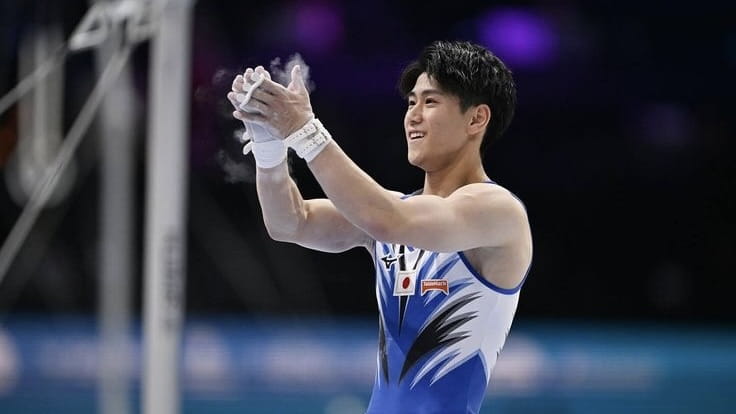
Japan captured the men’s team gold medal at the 2026 Artistic Gymnastics World Championships in Rotterdam, Netherlands, following a dramatic final that remained undecided until the last rotation. Led by an outstanding performance from Daiki Hashimoto, the Japanese team held off Russia and China to secure the world title.
The competition at Rotterdam’s Ahoy Arena delivered a thrilling battle between three of the sport’s leading nations, with small mistakes and crucial routines ultimately determining the podium.
The men’s team final featured six apparatus rotations, testing each nation’s technical strength, consistency, and ability to perform under pressure.
As the competition approached its final rotation, Japan and China were separated by only 0.1 points. Russia remained close behind, approximately half a point further back, keeping all three teams in contention for gold.
With such narrow margins, every landing, handstand, and execution deduction became important. A single mistake could significantly change the standings.
Japan maintained its composure during the decisive moments, producing the performances needed to finish at the top of the leaderboard.
Daiki Hashimoto played a central role in Japan’s victory, particularly with his impressive horizontal bar routine.
The defending world all-around champion demonstrated the technical precision and competitive composure that have made him one of the sport’s most recognizable athletes.
His performance on the horizontal bar proved especially important during the final rotation, when Japan needed to protect its narrow advantage over its closest competitors.
The result also reinforced Japan’s reputation for combining technical difficulty with consistent execution across multiple apparatus.
China entered the final rotation with a realistic opportunity to challenge for the gold medal. However, costly errors on the floor exercise damaged its chances.
Yang Haonan stepped outside the competition boundary and later landed on his hands, resulting in deductions that affected China’s overall score.
These mistakes opened the door for Russia to move into second place.
Daniel Marinov contributed significantly to Russia’s silver-medal performance, delivering consistent routines on the parallel bars, vault, and floor exercise.
Russia’s team also included promising young talent, demonstrating its ability to compete against established international contenders.
China ultimately finished third, while Great Britain narrowly missed the podium in fourth place.
Beyond the world championship medals, the team final carried major significance for the next Olympic cycle.
Japan, Russia, and China secured the first men’s team qualification places for the Los Angeles 2028 Olympic Games.
Earning Olympic qualification at this stage provides an important competitive milestone and allows the qualified teams to focus on their longer-term preparations.
The results also highlighted the importance of maintaining consistency across all six apparatus. In a closely contested team competition, avoiding major errors can be just as decisive as performing the most difficult skills.
Attention now turns to the men’s individual all-around final, scheduled for Thursday.
A major storyline is the anticipated contest between Japanese teammates Daiki Hashimoto and Shinnosuke Oka.
Hashimoto enters as the defending world all-around champion, while Oka brings the credentials of an Olympic all-around champion. Their contrasting strengths and competitive experience make the event one of the most anticipated contests of the championships.
China’s Zhang Boheng, who defeated both Japanese gymnasts at the previous month’s Asian Games, is absent because of injury.
His absence could create additional opportunities for other contenders, including Russia’s Daniel Marinov and 18-year-old Arsenii Dukhno.
Dukhno impressed during qualification, finishing third behind the two Japanese gymnasts in his senior World Championships debut.
The championships continue with the women’s team final on Wednesday, where China and the United States enter among the leading contenders.
The American team is seeking to extend its remarkable run of women’s team world titles, which began in 2011.
Meanwhile, Japan’s men’s team victory has already provided one of the defining moments of the championships.
The narrow margins, Hashimoto’s decisive performance, and the battle for Olympic qualification demonstrated why team gymnastics demands both individual excellence and collective consistency.
With the individual finals still to come, Rotterdam promises further opportunities for established champions and emerging talents to make their mark on the world stage.
Source: article on japantimes.co.jp published October 21, 2026.
Achieve More With VSA: Boost your skills with world-class coaches for just $29/hour. Personalized programs 24/7, 365 days a year, anywhere in the world.
By Vitalina Andrushchenko, Staff Writer
July 29, 2026
5 Skills Named After Olympic Gymnasts
May 24, 2026
How to Improve Toe Point in Ballet
April 28, 2026
5 Ways to Hold Spin Positions Longer
Competition highlights, industry trends, expert opinions, and stories from athletes and artists worldwide — delivered straight to your inbox