 English
 中文 (中国)
 Español
February 19, 2026
The Million-Dollar Medal: Alysa Liu’s Olympic Journey
July 20, 2026
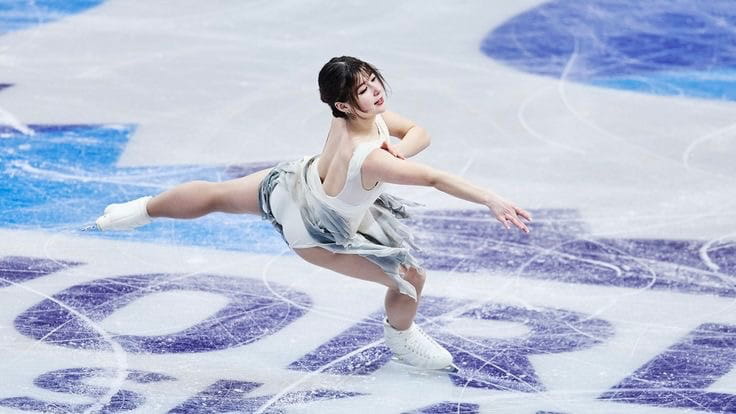
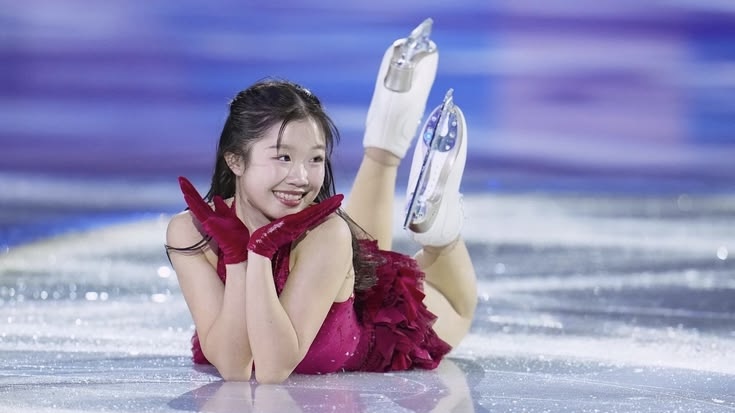
American figure skater Alysa Liu added another major achievement to her remarkable 2026 season by winning the Best Breakthrough Athlete award at the 2026 ESPYS. The award recognized not only her outstanding Olympic performances but also one of the most inspiring comeback stories in modern figure skating.
After becoming Olympic champion, Liu was honored alongside some of the biggest names in international sport, showing how her achievements reached audiences far beyond the skating world.
(Source: ESPN ESPYS, U.S. Figure Skating)
Liu’s talent was evident from an early age. At just 13 years old, she became the youngest U.S. women’s national champion in history, breaking a record that had stood for decades.
She quickly became known for attempting some of the sport’s most difficult jumps, including the triple Axel and quadruple jumps, achievements rarely seen in women’s figure skating at the time.
Many expected her career to continue rising without interruption—but elite sport often follows an unpredictable path.
Following years of intense international competition, Liu stepped away from figure skating for nearly two years.
Rather than continuing simply because others expected her to, she chose to take time away from competition to rediscover her motivation and enjoy life outside elite sport.
Her decision surprised many fans, but it ultimately became one of the most important turning points in her career.
Returning with renewed confidence and a healthier perspective allowed her to perform with greater freedom and maturity.
At the 2026 Winter Olympic Games in Milan-Cortina, Liu delivered the strongest performances of her career.
She captured Olympic gold in the women’s singles event and helped Team USA win Olympic gold in the mixed team competition, becoming one of the biggest stars of the Games.
Her skating combined technical precision, consistency, refined artistry, and composure under pressure—qualities that often separate Olympic champions from other elite competitors.
Liu’s greatest strength is her balance between athletic difficulty and effortless presentation.
Her jump technique is efficient, allowing her to generate excellent height while maintaining fast rotational speed. She typically enters jumps with strong control, minimizing unnecessary movement before takeoff and creating smoother landings.
Another important characteristic is her skating quality between technical elements. Rather than rushing from one jump to the next, Liu maintains continuous flow across the ice with clean edges, controlled speed, and expressive choreography.
Her musical interpretation has also matured significantly. Compared with her early junior career, her movements now appear more natural, with stronger attention to body lines, timing, and emotional connection to the music.
Perhaps the biggest change, however, is psychological. Her performances now show greater confidence and patience, allowing difficult technical elements to fit naturally into the overall program instead of dominating it.
While accepting the ESPY award, Liu reflected on the challenges she had overcome.
“I’ve been in my sport since I was 5 years old and I had some really rough times in it. I took two years off. So, for me, this really feels like I broke through in my own way, for myself, and for my sport.”
Her words resonated with many athletes because they emphasized that success is not always measured by medals alone, but also by personal growth and resilience.
(Source: 2026 ESPYS acceptance speech)
Alysa Liu became the youngest U.S. women’s national champion at just 13 years old. She was among the first American women to successfully land the triple Axel and quadruple jumps in national competition. After stepping away from elite skating for nearly two years, she returned to become a two-time Olympic gold medalist in Milan-Cortina 2026, completing one of the most remarkable comebacks in recent figure skating history.
(Source: U.S. Figure Skating, International Skating Union)
Liu’s journey shows that every athlete develops differently.
Taking time to recover mentally can be just as important as physical training. Long-term success depends on enjoying the sport, building strong technical fundamentals, trusting the training process, and remembering that setbacks do not define an entire career.
Alysa Liu’s Olympic victories and ESPY award represent far more than competitive success.
Her story demonstrates that resilience, self-belief, and a genuine love for skating can lead to extraordinary achievements. By returning on her own terms and performing at the highest level, she has become an inspiration for the next generation of figure skaters around the world.
Achieve More With VSA: Boost your skills with world-class coaches for just $29/hour. Personalized programs 24/7, 365 days a year, anywhere in the world.
By Vitalina Andrushchenko, Staff Writer
February 19, 2026
The Million-Dollar Medal: Alysa Liu’s Olympic Journey
February 21, 2026
A Guide to Rhythmic Gymnastics Apparatus
February 18, 2026
Ami Nakai Stuns With Triple Axel to Lead Olympic Short Program
Competition highlights, industry trends, expert opinions, and stories from athletes and artists worldwide — delivered straight to your inbox