 English
 中文 (中国)
 Español
July 29, 2026
5 Skills Named After Olympic Gymnasts
September 10, 2026
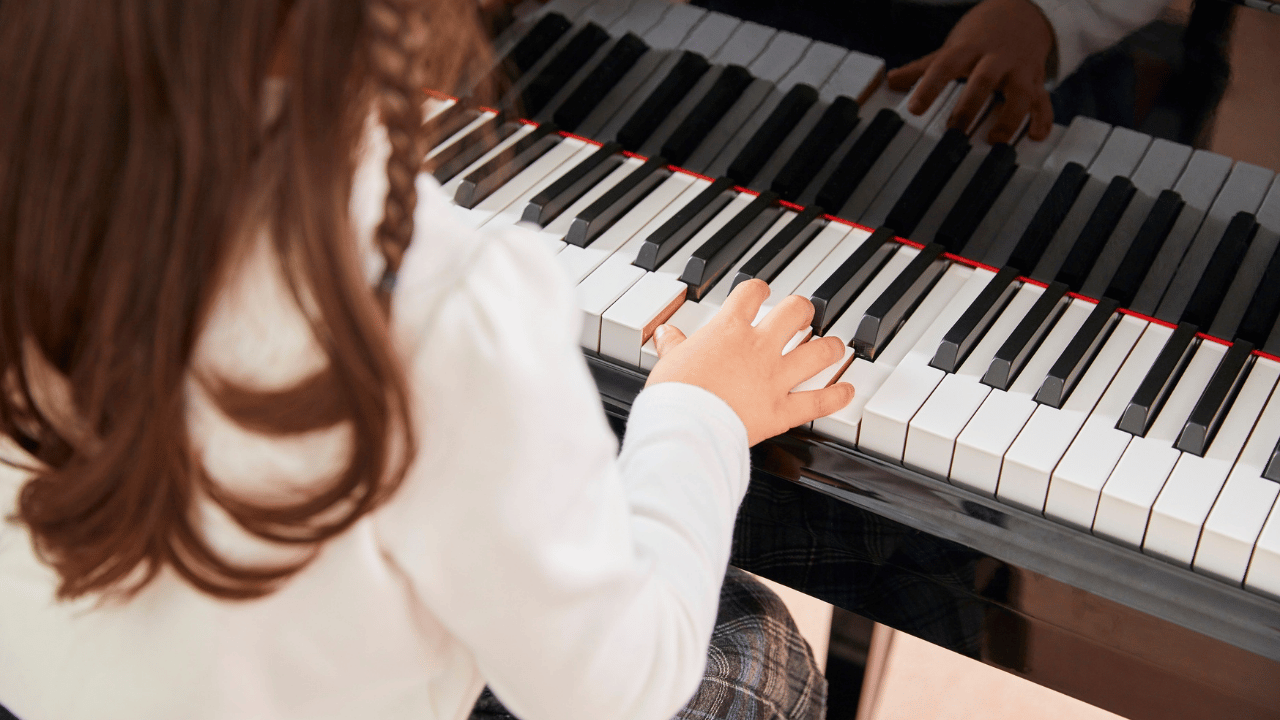
Stress can follow us everywhere — from work and study to constant notifications, deadlines, and busy routines. Finding a simple activity that helps the mind slow down can make a meaningful difference. For many people, that activity is music.
And you don’t always have to listen to music. Playing the piano can turn music into an active form of stress relief, combining concentration, creativity, movement, and emotional expression in one experience.
When you sit at the piano, your attention naturally shifts toward what is happening in the present moment. You have to follow the rhythm, coordinate both hands, read notes or remember patterns, and listen to the sound you are creating.
That combination can temporarily move attention away from stressful thoughts.
Instead of thinking about tomorrow’s deadline or replaying yesterday’s conversation, your brain is focused on the next chord, melody, or movement. Piano practice can therefore create a small mental space where everyday worries become less dominant.
Research on music and stress supports the idea that musical activities can influence both psychological and physiological responses. A large meta-analysis of 104 randomized controlled trials involving 9,617 participants found that music interventions were associated with significant reductions in both psychological and physiological stress outcomes.
Another systematic review examined biological markers such as cortisol, a hormone closely associated with the body’s stress response. The evidence suggests that music interventions have potential to reduce stress-related biomarkers, although researchers emphasize that results vary depending on the intervention and study design.
Importantly, music does not have to sound a certain way to be relaxing. Personal preference matters. Research on everyday music listening found particularly strong reductions in perceived stress when people listened specifically for relaxation.
That makes the piano especially interesting: you can choose the tempo, dynamics, melody, and style yourself.
One of the biggest benefits of playing piano for relaxation is that it doesn’t have to be a performance.
You can play a familiar song slowly. Repeat a simple chord progression. Improvise a melody. Practice scales. Or simply experiment with sounds.
There is no requirement to play perfectly.
In fact, treating piano practice as a creative break rather than another task can make the experience much more enjoyable. The goal is not necessarily to master a difficult piece. Sometimes the goal is simply to spend 15 or 20 minutes doing something that requires your full attention.
Piano playing also involves physical coordination. Your fingers move independently, your hands work together, and your eyes, ears, and brain continuously communicate.
This creates a unique combination: your body is active while your attention is focused.
For beginners, even learning a short melody can provide a feeling of progress. As the hands gradually become more familiar with the keyboard, something that initially required intense concentration can begin to feel automatic.
That sense of progress can be rewarding in itself.
You don’t need hours of practice to turn piano into a relaxing habit.
Try setting aside 10–20 minutes at the end of the day. Put your phone away, choose something you genuinely enjoy playing, and forget about performance or perfection.
Start with something familiar. Play slowly. Take a few deep breaths between sections. If you make a mistake, keep going.
The point is not to escape your life — it is to give your mind a short period in which it doesn’t have to solve everything.
Music is not a universal cure for stress, and research findings are not completely consistent across all situations. A 2022 meta-analysis of controlled studies, for example, found that the effects of music listening on stress recovery can depend on factors such as genre, tempo, who chooses the music, and how stress is measured.
But when piano feels enjoyable and personally meaningful, it can become more than a hobby.
It can become a small daily ritual for slowing down, expressing yourself, and giving your mind a chance to breathe.
Achieve More With VSA: Boost your skills with world-class coaches for just $29/hour. Personalized programs 24/7, 365 days a year, anywhere in the world.
By Vitalina Andrushchenko, Staff Writer
July 29, 2026
5 Skills Named After Olympic Gymnasts
March 17, 2026
Hall of Fame: ISU Figure Skating Awards Winners
March 24, 2026
2026 World Figure Skating Championships in Prague
Competition highlights, industry trends, expert opinions, and stories from athletes and artists worldwide — delivered straight to your inbox