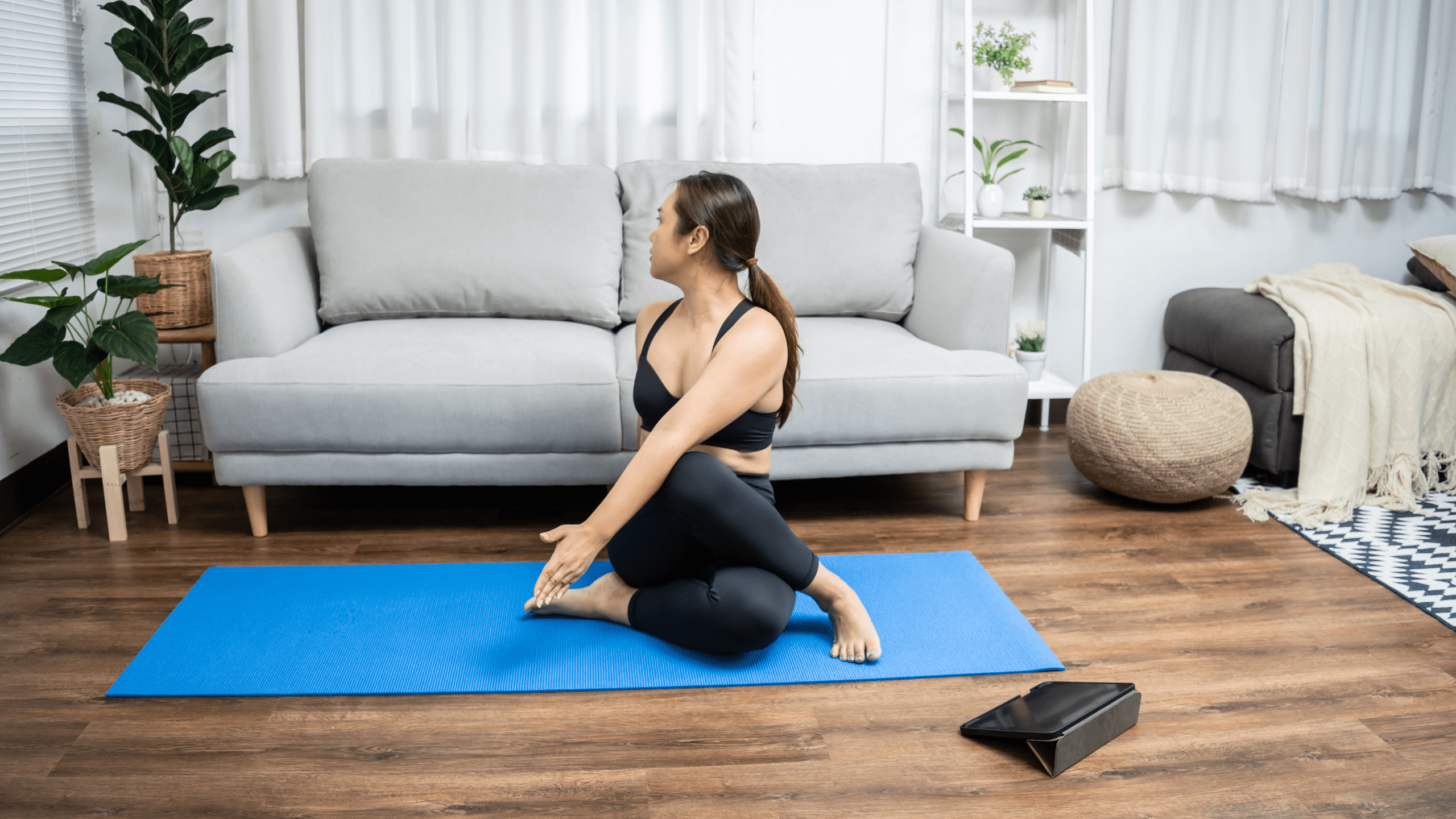
Restarting a flexibility routine after a long hiatus is a test of patience rather than physical strength. Connective tissues like tendons and ligaments lose elasticity faster than muscle fiber, making a cautious approach essential to avoid strains or long-term injury. The goal is to regain your range of motion through consistent, incremental progress.
Step 1: Check Your Ego
The most common mistake when returning to stretching is attempting to reach your previous “peak” depth immediately. Your nervous system has likely reset its protective barriers, meaning your muscles will tighten sooner than they used to.
Assess Reality: Accept your current limitations without judgment.
Avoid Forcing: Never have someone push you into a stretch or use ballistic (bouncing) movements to reach a goal.
Step 2: Dynamic vs. Static
When coming back from a break, the order of your stretches is critical for safety.
Start Dynamic: Use controlled, repetitive movements like leg swings or arm circles to increase blood flow and wake up the nervous system.
End Static: Save the long, stationary holds for the end of your session when the muscles are warm. This helps reset the resting length of the muscle.
Step 3: The 70% Intensity Rule
During the first two weeks, aim for a “Goldilocks” level of tension. You should feel a slight pull, but never sharp pain or intense discomfort.
Find the Edge: Stretch until you feel about 70% of your maximum possible tension.
Breathe Through It: If you cannot breathe deeply and calmly, you are stretching too deep. Deep breathing signals the brain to allow the muscle to relax.
Consistency is the hardest part of a flexibility comeback. External structure can help bridge the gap between motivation and habit.
Structured Learning: Joining a group class provides a professional eye to correct your alignment, which is vital when your body is “re-learning” movements.
Comfort of Home: Online stretching classes are an excellent way to train comfortably. They allow you to follow a guided routine without the pressure of a gym environment, making it easier to stay consistent during the early, more difficult weeks.
Step 5: Hydration and Consistency
Flexibility is as much about chemistry as it is about physics.
Hydrate Tissues: Dehydrated fascia (the casing around your muscles) is brittle and prone to micro-tears. Increase water intake to keep these tissues supple.
Frequency Over Duration: It is more effective to stretch for 10 minutes every day than to do one 70-minute session once a week.
Common Pitfalls to Avoid
Stretching Cold: Never perform deep static stretches without at least 5 minutes of light movement to raise your body temperature.
Ignoring Asymmetry: Do not ignore if one side is tighter than the other. Spend an extra 30 seconds on your tighter side to rebalance the body.
Holding Your Breath: This triggers a “stress response” that actually causes muscles to tighten further.
Ultimately, remember that true progress isn’t measured by how quickly you return to your old records, but by how consistently you show up for your future self.
Achieve More With VSA: Boost your skills with world-class coaches for just $29/hour. Perfect for skaters, hockey players, dancers, and athletes, VSA offers personalized training 24/7, 365 days a year, anywhere in the world.


 English
 中文 (中国)
 Español