

 English
 中文 (中国)
 Español


July 29, 2026
5 Skills Named After Olympic Gymnasts
April 08, 2026
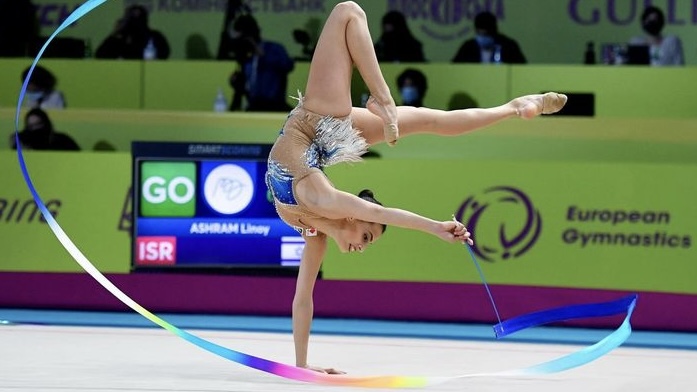
Of the five rhythmic gymnastics apparatus, the ribbon is notoriously the most “temperamental.” At six meters long, it acts as a high-speed physics experiment in fluid dynamics. The moment the energy stops flowing, the ribbon collapses, leading to the two nightmares of any gymnast: the static knot or the loss of pattern control. Mastering the ribbon isn’t about strength; it’s about becoming a master of constant, rhythmic air pressure.
A knot is rarely a random accident; it is the physical result of a “dead zone” in your movement. When the tip of the ribbon catches up to the handle, or when the air resistance drops, the fabric folds over itself.
The 2020 Tokyo Olympics provided a masterclass in ribbon management under extreme pressure. Israeli gold medalist Linoy Ashram faced every gymnast’s worst fear during her final routine: a noticeable drop and a brief snag.
In her “The Final Countdown” routine, Ashram demonstrated why she is a master of the apparatus. While she had a rare error, her recovery highlighted a crucial technical truth: speed is safety. Analysis of her performance shows that even when the ribbon flickered near her body, she immediately increased the frequency of her spirals. By injecting a massive burst of energy through her wrist, she used centrifugal force to “shake out” any potential folds before they could tighten into a knot. She didn’t slow down to “fix” the ribbon; she accelerated to straighten it.
At VSA, we believe that “feeling” the ribbon is just as important as the technique.
Achieve More With VSA: Boost your skills with world-class coaches for just $29/hour. Personalized programs 24/7, 365 days a year, anywhere in the world.
By Vitalina Andrushchenko, Staff Writer
Competition highlights, industry trends, expert opinions, and stories from athletes and artists worldwide — delivered straight to your inbox


