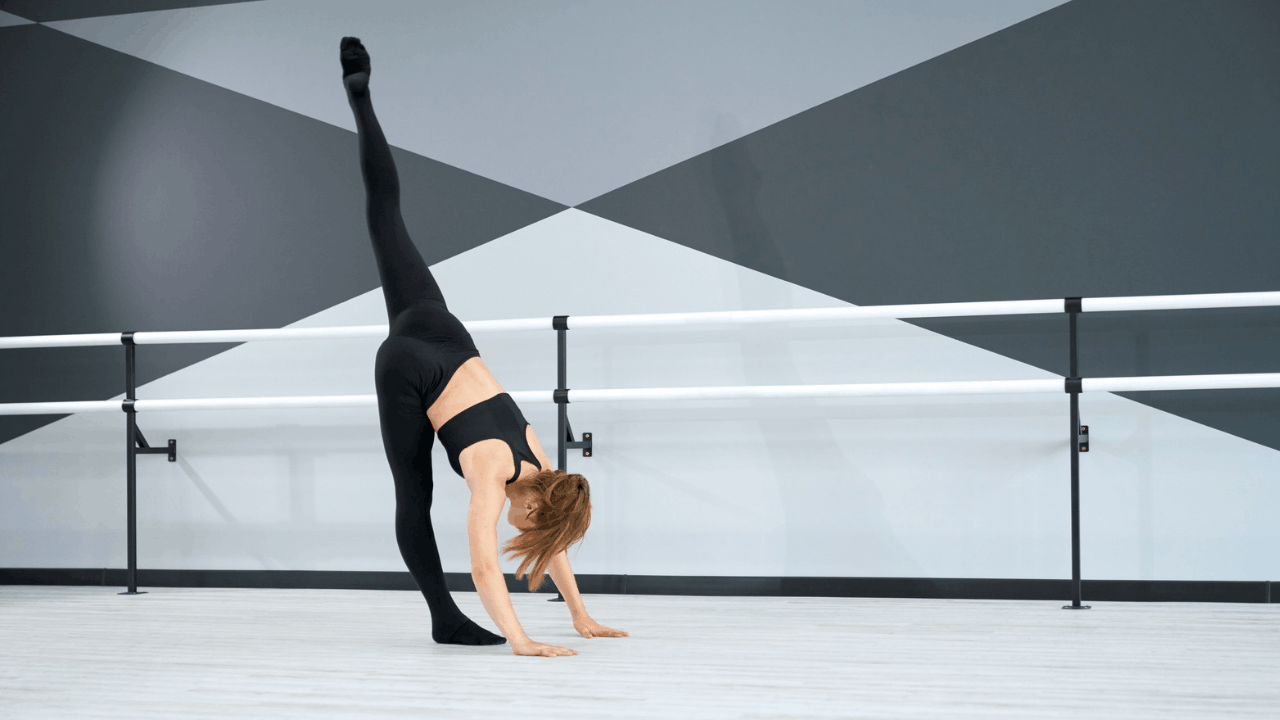
It is a common misconception in the athletic world that flexibility is solely about the length of a muscle. In reality, your range of motion (ROM) is strictly governed by the nervous system and the strength of the surrounding musculature. When muscles are weak, the body’s natural defense mechanisms—specifically the stretch reflex—trigger a tightening response to prevent injury. Understanding the science of “strength-based flexibility” is essential for any elite athlete.
The Science of Protective Tension
Flexibility is not just a physical property; it is a neurological permission. If your brain perceives that a joint is unstable due to weak supporting muscles, it will not allow the primary muscles to lengthen. This is known as protective tension.
The Stretch Reflex (Muscle Spindles): Located within the muscle fibers, these sensory receptors detect changes in muscle length. If a muscle is stretched too far or too fast, the spindle sends a signal to the spinal cord, causing the muscle to contract. If the muscle is weak, this reflex is hyper-sensitive because the body “fears” it cannot control the limb at extreme angles.
Antagonistic Inhibition: For a muscle to stretch (the agonist), the opposing muscle (the antagonist) must relax. However, if the antagonist is too weak to support the joint in that new position, the brain keeps both muscles “locked” to maintain stability.
Sarcomere Length-Tension Relationship: Muscle contraction occurs through the sliding of actin and myosin filaments. At extreme lengths, there is less “overlap” between these filaments, making the muscle structurally weaker. Building strength at the end-range of motion is the only way to convince the nervous system that a deep stretch is safe.
Key Insights for Athletes (Source: Science of Flexibility, M. Alter)
To unlock true flexibility, one must shift from passive stretching to active end-range strengthening.
Eccentric Loading: Strengthening a muscle as it lengthens (the “lowering” phase of an exercise) has been scientifically proven to increase the number of sarcomeres in series, effectively “lengthening” the muscle while keeping it strong.
Joint Stability: Flexibility without strength is simply “joint laxity,” which leads to dislocations and tears. Strength acts as the “brakes” for your flexibility.
The Brain-Body Connection: Stretching is 50% physical and 50% neurological. You cannot “force” a muscle to relax; you must “train” it to feel secure through consistent strength work.
Ultimately, the strongest muscle is the one that is allowed to be the most flexible; strength is the foundation upon which grace is built.
Achieve More With VSA: Boost your skills with world-class coaches for just $29/hour. Personalized programs 24/7, 365 days a year, anywhere in the world.


 English
 中文 (中国)
 Español