 English
 中文 (中国)
 Español
July 29, 2026
5 Skills Named After Olympic Gymnasts
April 11, 2026
In today’s world, social media has completely transformed how young athletes see gymnastics. Perfect routines, flawless flexibility, and confident performances fill platforms like Instagram and TikTok. At first glance, elite gymnastics looks almost effortless — as if success is just a matter of talent and aesthetic practice.
But the reality behind elite training is very different.
Social media highlights the result: a clean routine, a perfect split, a high jump, or a stuck landing. These moments are visually satisfying and easy to consume. However, they represent only a tiny fraction of what training actually looks like.
What you rarely see:
Elite gymnastics is not built on highlight moments. It is built on consistency, discipline, and the ability to repeat the basics daily — even when it feels boring or difficult.
For students, especially beginners and intermediate athletes, this gap between reality and online content can create unrealistic expectations. When progress feels slow, many assume they are doing something wrong.
In truth, slow progress is normal. Elite athletes often spend years mastering what looks like a “simple” element. Social media compresses time, but training does not.
Understanding this difference is essential. It protects motivation and helps athletes stay consistent rather than discouraged.
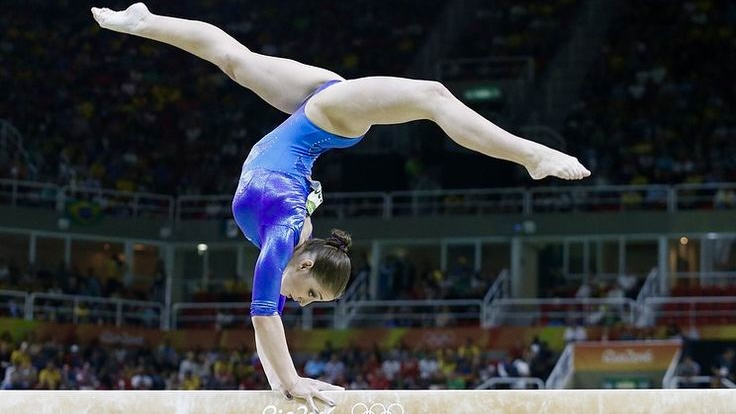
To better understand the reality of elite training, let’s look at the preparation style of Olympic champion Aliya Mustafina. Known for her precision and calm execution, her routines often appeared effortless — but her training process tells a different story.
Mustafina’s approach was highly structured and detail-oriented. Instead of focusing only on full routines, she spent a significant amount of time breaking skills into smaller components. For example, in uneven bars training:
This method may not look impressive on video. There are no dramatic highlights — just repetition, correction, and refinement.
Another key aspect of her training was energy management. Unlike what social media might suggest, elite gymnasts do not perform full routines at maximum intensity every session. Instead, they carefully plan workload to avoid overtraining and injury.
Mustafina also demonstrated strong mental discipline. She was known for staying composed under pressure, which came not from natural calmness alone, but from repeated exposure to competition-like scenarios during training.
The biggest lesson is that elite performance is built in unseen moments. The “boring” parts of training — drills, corrections, and repetition — are actually the most important.
Instead of comparing yourself to social media highlights, focus on:
It is also important to remember that every athlete’s path is different. Even among elite gymnasts, training styles vary depending on strengths, body type, and coaching philosophy.
Social media is not the enemy. It can inspire, educate, and connect athletes around the world. However, it should not be used as the only reference point for what progress should look like.
A healthier approach is to treat social media as motivation, not measurement. Your real progress happens in training sessions, not in posts.
Elite gymnastics is not as effortless as it appears online. Behind every clean routine is years of structured training, repetition, and mental resilience.
When students understand this reality, they can train with more patience, confidence, and long-term focus — which ultimately leads to better results and a more positive experience in the sport.
Achieve More With VSA: Boost your skills with world-class coaches for just $29/hour. Personalized programs 24/7, 365 days a year, anywhere in the world.
By Vitalina Andrushchenko, Staff Writer
July 29, 2026
5 Skills Named After Olympic Gymnasts
March 17, 2026
Hall of Fame: ISU Figure Skating Awards Winners
March 24, 2026
2026 World Figure Skating Championships in Prague
Competition highlights, industry trends, expert opinions, and stories from athletes and artists worldwide — delivered straight to your inbox