 English
 中文 (中国)
 Español
February 19, 2026
The Million-Dollar Medal: Alysa Liu’s Olympic Journey
August 18, 2026
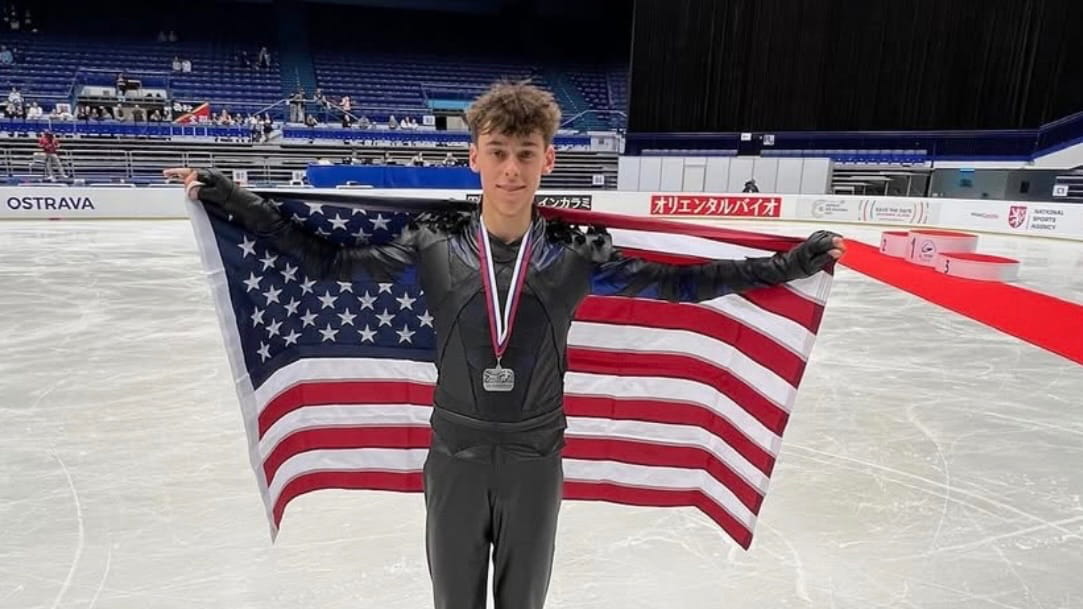
Patrick Blackwell © Instagram / patrickblackwell_
Patrick Blackwell is entering the 2026–27 season with a different idea of what it means to succeed in figure skating.
After winning the 2026 U.S. junior men’s title, the American skater has shifted his focus beyond technical difficulty. His recent development has been shaped by a stronger mindset, improved skating skills, smarter training and a growing desire to become a performer audiences genuinely want to watch.
Blackwell’s transformation began after he finished third at the 2025 U.S. Championships.
At the time, he approached competitions with a simple priority: land the jumps. When one element went wrong, however, the mistake could affect the rest of the program.
Over the following season, he learned to treat competitions differently. Instead of worrying about the final result, he began focusing on each element individually, trusting his preparation and enjoying his time on the ice.
International experience helped reinforce that change. On the ISU Junior Grand Prix circuit, Blackwell won silver in Bangkok before finishing fourth in Baku. The demanding schedule taught him that mental strength was only part of the equation: physical recovery mattered just as much.
The short turnaround between the two competitions left him physically exhausted. He realized that repeatedly practicing difficult quads without enough recovery was not necessarily helping his performance.
Ironically, Bangkok became one of his most valuable competitions. Despite terrible training sessions and doubts about whether he could even medal, he delivered a strong performance and discovered that he could compete successfully even when preparation did not feel perfect.
At the 2025 ISU World Junior Championships, Blackwell arrived with a different attitude.
Rather than setting a specific placement goal, he wanted to experience the event, learn from the world’s best junior skaters and enjoy competing.
One unexpected conversation reminded him that he first had to qualify for the free skate. The realization added pressure to his short program and led to some mistakes, but it also taught him how to handle a situation he had never experienced before.
After qualifying, Blackwell had an unusual opportunity: he could finish his own competition early and watch the remaining skaters.
He stayed and observed how they warmed up, performed and dealt with pressure. What stood out most was the importance of skating skills.
For Blackwell, the experience highlighted qualities such as glide, edge depth and the ability to make a program feel like a complete performance, rather than simply a collection of difficult jumps.
That lesson has changed the way Blackwell trains.
Earlier in his career, he measured success largely through technical content. Now he understands that difficult jumps are only one part of the scoring picture.
He has started running programs with just spins and skating skills, concentrating on the impression and character he wants to create. Once that foundation is established, he gradually adds the jumps back into the program.
His technical ambitions remain strong. He wants to make his quad toe and quad Salchow more consistent and continue improving his triple jumps.
He has also landed quad loop and quad Lutz in practice, but neither is currently reliable enough for competition. For Blackwell, attempting a jump that succeeds only occasionally is not worth sacrificing consistency elsewhere.
Blackwell will continue competing internationally as a junior while also moving into senior competition domestically.
The transition will give him additional challenges, including different jump layouts, longer free skates and an extra step sequence. Rather than seeing those changes as obstacles, he views them as opportunities to develop stamina and adapt his training.
His training schedule has also become more structured.
Working with strength and conditioning coach Brandon Siakel, Blackwell has moved away from constant repetition toward a planned balance between moderate and high-intensity days. The aim is to preserve energy across weeks of training and arrive at competitions in better condition.
He is also adjusting to new ISU rules, including the introduction of the choreographic spin and the reduction in the number of jumping passes.
Although he misses having an additional jump, Blackwell sees the rule changes as an indication that the sport is placing greater emphasis on the complete program.
His changing perspective is also visible in his programs.
This season, choreographer Adam Blake created a new short program combining Spanish influences with rock music. Blackwell wanted something powerful and distinctive, drawing inspiration from a flamenco-style program he performed when he was younger.
The free skate carries a more personal story.
Blackwell chose to preserve much of the program he previously performed while adding a new opening and updated choreography. Its emotional core remains a tribute to his late friend Spencer Lane, who died in the January 2025 plane crash near Washington, D.C.
Keeping part of Lane’s music allows Blackwell to carry their friendship and his friend’s connection to skating forward.
Blackwell has also discovered the importance of having interests outside the rink.
Mountain biking, surfing, hiking, climbing and canyoneering give him a chance to step away from skating and reset. He sees these activities as a way to prevent burnout and keep skating feeling like something he loves rather than simply a job.
After graduating from high school, Blackwell plans to take a gap year to focus on skating while considering his future education and career.
For now, his goals are clear: earn two Junior Grand Prix assignments, qualify for senior nationals, return to Junior Worlds and land three quads in competition by the end of the season.
But his ambitions extend beyond medals and rankings.
Blackwell wants to become a skater who attracts attention because of the entire performance — someone fans actively want to see compete.
His journey is therefore about more than adding harder jumps. It is about learning how to combine technical ability, skating quality, confidence, artistry and consistency into one complete package.
And that may be the most important jump he is making yet: moving beyond the jumps themselves.
Source: article on goldenskate.com By Paula Slater August 16, 2026.
Achieve More With VSA: Boost your skills with world-class coaches for just $29/hour. Personalized programs 24/7, 365 days a year, anywhere in the world.
By Vitalina Andrushchenko, Staff Writer
February 19, 2026
The Million-Dollar Medal: Alysa Liu’s Olympic Journey
July 29, 2026
5 Skills Named After Olympic Gymnasts
February 21, 2026
A Guide to Rhythmic Gymnastics Apparatus
Competition highlights, industry trends, expert opinions, and stories from athletes and artists worldwide — delivered straight to your inbox